Choosing the right career path often depends on industry demand, long-term growth potential, and global employment opportunities. Today, several job oriented courses can help students and early graduates build skills for industries such as technology, healthcare management, finance, and design. Many job-oriented courses in India also offer strong salary potential and international career prospects when aligned with the student’s interests, strengths, and future goals.
Why Choose Job Oriented Courses with Global Opportunities?
Global industries are increasingly looking for professionals with specialised technical, analytical, healthcare, management, and digital skills. As businesses expand across borders and remote work becomes more common, courses with international job opportunities can help students access wider career options and stronger long-term growth prospects.
Many of the best job-oriented courses also offer transferable skills that remain relevant across different countries and industries. In addition to better salary potential, these programmes may provide greater career stability by aligning with evolving global employment trends and future workforce requirements.
How to Choose the Right Job Oriented Course?
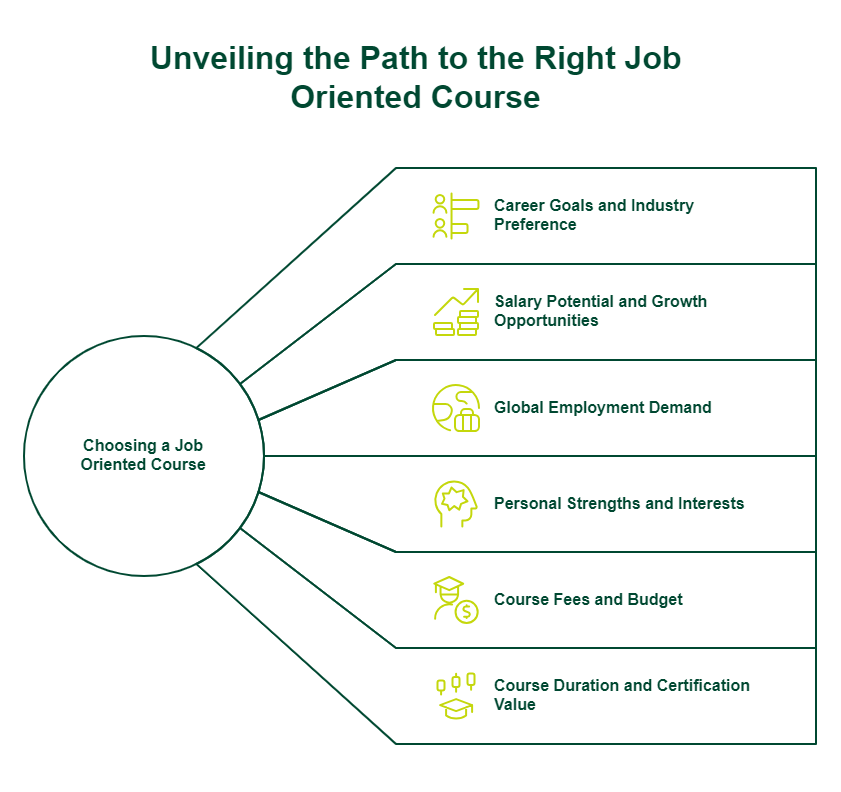
Selecting the right programme requires balancing personal interests with long-term career opportunities and industry demand. While evaluating job-oriented courses after 12th or graduation, students should consider whether the course aligns with their strengths, preferred work environment, and future financial goals. Many top courses for global careers also require careful assessment of learning costs, duration, and international demand before making a decision.
Important factors to evaluate include:
- Long-term career goals and industry preference
- Expected salary potential and growth opportunities
- Global employment demand for the skill
- Alignment with personal strengths and interests
- Course fees and overall budget
- Course duration and certification value
Best Job Oriented Courses in India with Global Opportunities
Several globally demanded courses now offer strong career opportunities across industries such as technology, healthcare, finance, management, media, and law. These programmes are valued for their practical skill development, international relevance, and long-term growth potential in rapidly evolving global job markets.
Engineering and Technology Courses
Engineering and technology programmes continue to remain among the most preferred future career courses in India due to rapid digital transformation across industries. Specialisations in computer science, automation, and advanced technologies are seeing strong recruitment demand from multinational companies, startups, and global research organisations.
Popular career options include:
- Artificial Intelligence and Machine Learning
- Robotics and Automation
- Cybersecurity and Ethical Hacking
- Data Science and Analytics
- Software Engineering and Application Development
- Cloud and Infrastructure Engineering
Common job roles include software developer, AI engineer, cybersecurity analyst, robotics engineer, and data analyst.
Medical and Healthcare Courses
Healthcare-related professions continue to see strong global demand due to ageing populations, expanding healthcare infrastructure, and increasing focus on preventive care. Many countries actively recruit trained healthcare professionals from India across both clinical and administrative roles.
Popular healthcare courses include:
- MBBS and specialised medicine
- Nursing and critical care
- Physiotherapy and rehabilitation sciences
- Public health and hospital administration
- Biotechnology and medical research
- Healthcare management programmes
Countries such as the UK, Canada, Australia, and Germany often offer opportunities for qualified healthcare professionals.
Business and Management Courses
Management education remains one of the best professional courses after 12th and graduation for students seeking leadership, consulting, and corporate career opportunities. Courses related to Business Administration, finance, analytics, and global trade are valued across multinational companies and international business environments.
Popular management specialisations include:
- MBA and executive management
- Finance and investment management
- International business
- Supply chain and logistics
- Digital marketing and brand strategy
- Business analytics and operations
Career opportunities are available in consulting firms, financial institutions, global corporations, and international trade organisations.
Computer and IT Courses
The technology sector continues to create strong employment opportunities worldwide as businesses increase digital adoption and automation. Many IT-focused programmes also provide industry-recognised certifications that improve international employability across both technical and analytical roles.
High-demand IT specialisations include:
- Cloud computing and DevOps
- Full-stack development
- Artificial Intelligence applications
- Cybersecurity and network security
- Data analytics and Business Intelligence
- Mobile and web application development
Professionals with specialised certifications often find opportunities in global technology companies, consulting firms, and remote international roles.
Finance and Accounting Courses
Finance and accounting qualifications continue to offer strong salary potential and international career mobility. Global businesses require professionals who understand financial reporting, risk management, taxation, compliance, and investment analysis across different markets.
Popular finance-related qualifications include:
- Chartered Accountancy (CA)
- CFA and investment analysis
- ACCA and international accounting
- FRM and risk management
- Investment banking programmes
- Fintech and digital finance courses
These qualifications can open opportunities in multinational financial institutions, consulting firms, and investment companies.
Creative and Media Courses
Creative industries are expanding rapidly due to growth in digital media, streaming platforms, gaming, advertising, and online content consumption. Skilled professionals in design, animation, and visual communication are increasingly finding international freelance and full-time opportunities.
Popular creative career paths include:
- Animation and visual effects
- UX/UI design
- Gaming and interactive media
- Film production and editing
- Graphic design and branding
- Content creation and digital media
Many professionals also work remotely with international clients and global creative agencies.
Hospitality, Aviation, and Tourism Courses
The hospitality and travel sectors continue to recover and expand globally, creating demand for skilled professionals in customer service, operations, and tourism management. International hotel chains, airlines, and tourism companies regularly recruit trained candidates from India.
Popular career-oriented programmes include:
- Hotel management
- Aviation and airport management
- Travel and tourism management
- Cabin crew training
- Culinary arts and food production
Career opportunities are often available in international hotels, cruise lines, airlines, and tourism organisations.
Law and International Relations Courses
Legal and policy-related careers are becoming increasingly specialised due to global business expansion, digital regulation, and cross-border legal requirements. Professionals with expertise in international law and regulatory frameworks are seeing growing opportunities worldwide.
Popular specialisations include:
- Corporate and commercial law
- International law
- Cyber law and data protection
- Public policy and governance studies
- International relations and diplomacy
Graduates may find opportunities in multinational companies, international organisations, policy institutions, and legal advisory firms.
Highest Paying Career-Oriented Courses in India
Several high-salary courses in India offer strong earning potential due to increasing global demand for specialised technical, healthcare, financial, and management skills. Salary levels may vary depending on experience, certifications, country of employment, and industry demand.
|
Course Area
|
Global Demand
|
Salary Potential
|
International Scope
|
|
Artificial Intelligence and Data Science
|
Very High
|
High
|
Strong
|
|
MBA and Business Management
|
High
|
High
|
Strong
|
|
Healthcare and Medicine
|
Very High
|
High
|
Excellent
|
|
Finance and Accounting
|
High
|
High
|
Strong
|
|
Cybersecurity and Cloud Computing
|
Very High
|
High
|
Excellent
|
Courses with the Best Global Job Opportunities
Several industries across technology, healthcare, finance, engineering, and management continue to actively hire skilled Indian professionals due to talent shortages and growing international demand.
|
Course Area
|
Industries Hiring Globally
|
Common Hiring Regions
|
|
Artificial Intelligence and Data Science
|
Technology, Automation, Analytics
|
US, Canada, Europe, Singapore
|
|
Nursing and Healthcare
|
Hospitals, Healthcare Services
|
UK, Australia, Germany
|
|
Cybersecurity and Cloud Computing
|
IT, Banking, Consulting
|
US, Europe, UAE
|
|
Finance and Accounting
|
Banking, Investment, Consulting
|
UK, Singapore, UAE
|
|
Hospitality and Aviation
|
Hotels, Airlines, Tourism
|
UAE, Europe, Southeast Asia
|
Skills Needed to Succeed in Global Careers
Choosing the best courses for abroad opportunities is only one part of building a successful international career. Employers also look for practical workplace skills, adaptability, and the ability to work in multicultural environments across industries and regions.
Important skills include:
- Strong communication and interpersonal abilities
- Technical and industry-specific expertise
- Adaptability to global work environments
- Professional certifications and continuous learning
- Foreign language proficiency, where relevant
- Problem-solving and teamwork capabilities
Common Mistakes Students Make While Choosing a Career-Oriented Course
Many students select courses based only on popularity, peer influence, or short-term salary expectations without evaluating long-term suitability and industry demand. A well-informed decision requires balancing career opportunities with personal interests, skills, and market trends.
Avoid these mistakes while choosing your course:
- Following trends without proper research
- Ignoring personal strengths and skill alignment
- Choosing courses based only on salary expectations
- Overlooking global job demand and industry growth
- Not evaluating course quality or career scope
Future Trends in Career-Oriented Courses in India
Rapid technological and industrial changes are reshaping global employment patterns and creating demand for specialised skills. Many high-demand courses in India are now linked to areas such as Artificial Intelligence, renewable and green energy, healthcare technology, fintech, cybersecurity, automation, and sustainability management. These sectors are expected to generate strong long-term career opportunities both in India and internationally.
Financing Job Oriented Courses with a Personal Loan
Pursuing specialised courses or international certifications may involve significant expenses beyond tuition fees. In these situations, an unsecured personal loan for education can offer fast processing, flexible funds usage, and fewer course-related restrictions compared to traditional education loans.
In most cases, parents may also apply on behalf of their child to support academic and career goals. Before applying, borrowers can use a personal loan eligibility calculator to estimate their borrowing potential and repayment capacity.
Conclusion
Choosing the right career-oriented course can significantly influence long-term professional growth, salary potential, and international career opportunities. Factors such as industry demand, skill alignment, and future employment trends should be evaluated carefully before making a decision.
For those planning higher education or professional certifications, SMFG India Credit offers personal loan of up to Rs. 10 Lakhs* to help manage education-related expenses with flexible repayment tenures. Apply online to benefit from competitive personal loan interest rates starting from just 12.5%* per annum.