Understanding loan amortization is crucial for anyone navigating financial commitments. An amortized loan involves structured payments that systematically reduce both the principal and interest over time. Whether you're considering a mortgage loan, car loan, or personal loan, comprehending loan amortization provides clarity on your financial responsibilities.
This article delves into the loan amortization meaning and its practical implications, which will equip you with essential knowledge for informed financial decision-making.
What is an Amortized Loan?
An amortized loan is a structured financial arrangement with scheduled, regular payments that serve to gradually reduce both the principal amount and interest accrued over time. This repayment model is prevalent in various lending scenarios, such as mortgages, car loans, and personal loans. In an amortized loan, each instalment primarily addresses the accrued interest for the given period, with the remaining portion dedicated to diminishing the principal balance. This systematic approach ensures a gradual reduction of the overall debt.
The advantages of amortized loans are evident in their predictability and transparency. Borrowers gain a clear understanding of their financial obligations, making it easier to budget and plan for future payments. Lenders benefit from a structured repayment schedule that ensures a steady inflow of interest income and a gradual reduction of the principal amount.
Amortized loans provide borrowers with a practical means of managing substantial financial commitments, offering a balanced approach to repaying debt over an extended period. This systematic repayment strategy contributes to financial stability, making it a widely adopted and trusted method in the lending industry.
What are the Types of Amortising Loans?
Loan amortization is a systematic approach to repaying installment loans, particularly prevalent in financial products like personal loans, car loans, education loans, home equity loans, and fixed-rate mortgage loans.
This structured repayment method entails periodic Equated Monthly Installments (EMIs) comprising both principal and interest. Throughout the loan tenure, a fixed-rate amortized loan ensures that each payment consistently contributes to reducing the principal balance and covering accrued interest. This approach fosters clarity and predictability for borrowers, providing a tangible understanding of their financial obligations. Moreover, loan amortization facilitates effective financial planning, enabling individuals to manage their budgets and make informed decisions regarding their debt. As borrowers progress through the repayment schedule, they witness a gradual reduction in the outstanding balance, reinforcing a sense of accomplishment and financial control. Ultimately, loan amortization serves as a valuable tool for borrowers, offering a transparent and structured path toward debt resolution.
Must Read:Reasons To Finance Your Long Term Business Goals With A Loan Against Property
How an Amortized Loan Works
An amortized loan functions through a dynamic relationship between interest and principal within each payment, impacting the overall loan structure. The interest on such loans is computed based on the most recent ending balance. As payments are made, the interest amount decreases, primarily due to any excess payment reducing the principal and, subsequently, the balance on which interest is calculated. This inverse relationship between interest and principal is a defining characteristic of amortized loans.
The process involves a series of calculations. Initially, the current loan balance is multiplied by the interest rate for the current period to determine the interest due. The total monthly payment is then used to subtract the interest due, revealing the principal paid during the period. This principal amount is applied to reduce the outstanding balance, influencing the new balance for subsequent interest calculations.
The nature of this process gradually diminishes the outstanding balance, emphasizing a reduction in interest payments and a proportional increase in principal repayments over the loan's life. Amortized loans, whether for homes, cars, or personal use, follow this systematic approach, providing borrowers with a clear path towards debt resolution.
Example of Amortized Loan Formula (With Excel Template)
Now, we'll see how we can calculate loan amortization. Monthly Amortized Loan can be calculated with the following formula:

Where the interest formula is:
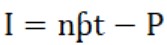
And,
- P = Principal
- R = Rate of interest
- t = Time in terms of year
- n = Monthly payment in a year
- I = Interest
- ƥ = Monthly Payment or EMI amount
A simple example is:
An individual took a home loan from a bank of ₹1,00,000 at the Rate of interest of 10% for 20 years. Now, we must calculate the EMI amount and interest component paid to the bank.
- P = ₹1,00,000
- r= 10% = 0.1
- t = 20
- n = 12
Amortization is Calculated Using the formula:
- ƥ = 0.1 * 1,00,000 / 12 * [1-(1+0.1/12)-12*20]
- ƥ = ₹965.02
And now, to calculate interest paid, we will put value in the interest formula.
- I = nƥt – P
- I = 12*965.02*20 – 1,00,000
- I = ₹131,605.2
So, the interest paid on the loan is ₹1,31,605.2.
The loan amortization formula in Excel can be seen below, in which the PMT formula is used.

Must Read:Loan Against Property For Medical Treatments
Conclusion
In conclusion, amortized loans provide borrowers with a structured and transparent repayment plan, allowing for flexibility through additional payments and empowering informed financial management throughout the loan. The consistent, fixed payments of amortized loans, which encompass both principal and interest, create a predictable schedule for borrowers In the realm of personal finance, SMFG India Credit understands the importance of flexibility and transparency. Our personal loans are designed to meet your unique financial needs, offering competitive rates and terms. Whether you're consolidating debt, pursuing a personal project, or managing unexpected expenses, an SMFG India Credit personal loan can provide the support you need. Apply now!