The Income Tax Rules 2026 came into force on 1 April 2026, replacing the Income Tax Rules 1962 and putting the new Income Tax Act, 2025, into practice. The changes reach salaried employees, business owners and NRIs through higher allowance exemptions, revised PAN limits and wider HRA benefits.
Here is what you need to know about new tax laws and rules before you plan your taxes for the year.
What Are the Income Tax Rules 2026?
The Income Tax Rules 2026 are the official set of procedures that sit under the Income Tax Act, 2025. The Central Board of Direct Taxes (CBDT) first released the rules in draft form for public feedback and later notified the final version on 20 March 2026. The rules came into effect on 1 April 2026 and apply from Tax Year 2026–27 onwards.
Draft income tax changes are usually circulated so that taxpayers, experts, and other stakeholders provide feedback before the rules are finalised and notified.
Why Were the Income Tax Rules 2026 Introduced?
The older framework had grown complex across six decades. The Income Tax new rules aim to make tax simpler to follow and easier to administer. The main goals are:
- Cutting the number of rules down to around 333
- Reducing disputes and litigation through clearer wording
- Encouraging digital records and faceless processes
- Matching allowance values with current living costs
- Bringing India's tax system closer to global practices
Key Changes in the Income Tax Rules 2026
The table below shows the Income Tax Rules changes that matter most to salaried taxpayers.
|
Item
|
Old Rules
|
Income Tax Changes 2026
|
|
Children's Education Allowance
|
₹100 per month per child
|
₹3,000 per month per child
|
|
Hostel Allowance
|
₹300 per month per child
|
₹9,000 per month per child
|
|
Free Meals
|
₹50 per meal
|
₹200 per meal
|
|
Non-cash Gifts
|
₹5,000 per year
|
₹15,000 per year
|
|
Overseas Medical Treatment
|
Tax-free if income below ₹2 lakh
|
Tax-free if income below ₹8 lakh
|
Other useful updates to the Income Tax Rules include digital books of accounts becoming mandatory for professionals, the e-Rupee (CBDC) being accepted as a valid payment mode, and higher PAN-quoting thresholds for certain transactions such as life insurance premiums and immovable property purchases.
Income Tax Rules 2026 vs the Earlier Rules
The new Income Tax law changes both the structure and several day-to-day thresholds. The comparison below sets out what shifts for you as a taxpayer.
|
Aspect
|
Earlier Rules (1962)
|
Rules 2026
|
|
Governing Act
|
Income Tax Act, 1961
|
Income Tax Act, 2025
|
|
Reporting Period
|
Previous Year and Assessment Year
|
Single Tax Year
|
|
50% HRA Cities
|
4 (Mumbai, Delhi, Kolkata, Chennai)
|
8 (adds Bengaluru, Pune, Hyderabad, Ahmedabad)
|
|
PAN for Immovable Property Transactions
|
Above ₹10 lakh
|
Above ₹20 lakh
|
|
Books of Accounts
|
Manual allowed
|
Digital mandatory for professionals
|
The wider HRA benefit still applies only under the Old Tax Regime, and you now need to disclose the relationship to the landlord to claim it.
How Will the Income Tax Rules 2026 Affect Salaried Individuals?
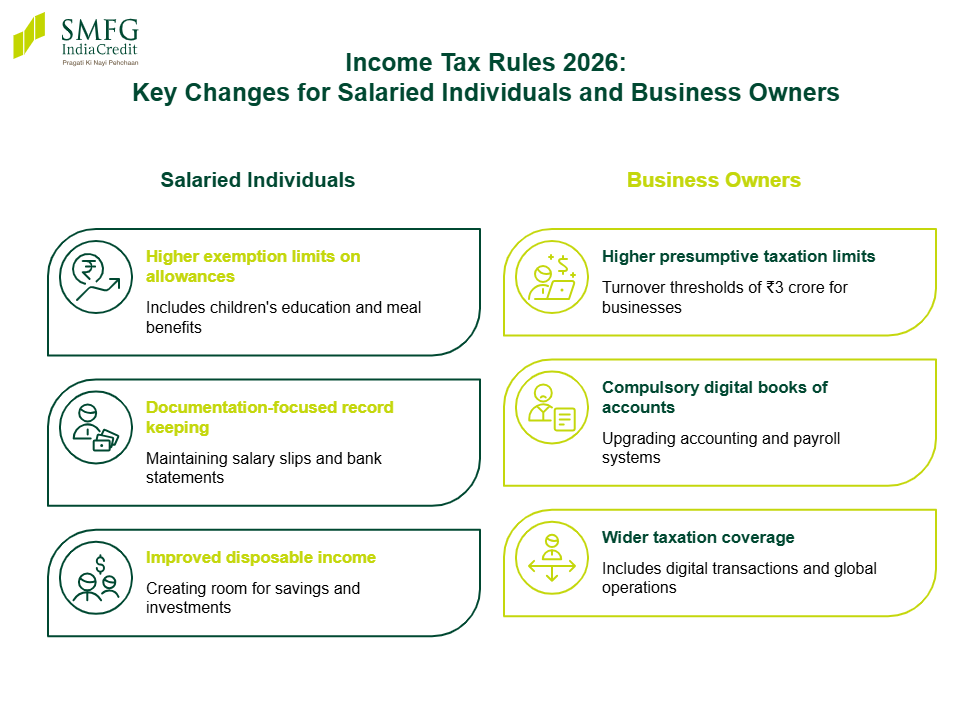
For salaried individuals, some of the biggest benefits may come from the higher exemption limits on certain allowances and employer-provided benefits. A children’s education allowance of ₹3,000 per month, hostel expenditure allowance of ₹9,000 per month, and employer-provided meal benefits valued at up to ₹200 per meal may help reduce taxable income, depending on the applicable tax regime and salary structure. It is advisable to review your compensation structure with your employer to understand the available tax benefits.
Key points regarding new tax rules for salaried employees:
- Higher tax-free limits for certain allowances under the Old Tax Regime
- A wider 50% HRA benefit if you live in one of the eight listed cities
- Landlord details are now needed to claim HRA
- New, simplified return forms from Tax Year 2026–27
Higher exemption limits and revised income tax compliance 2026 rules may improve disposable income for some taxpayers, creating better room for savings, investments, or planned expenses. In situations requiring additional funds, a personal loan may help manage short-term needs without disrupting long-term financial planning.
As tax reporting becomes increasingly digital and documentation-focused, maintaining organised salary slips, ITRs, bank statements, and proof of deductions can support smoother financial management. Keeping such records updated may also help while arranging the personal loan documents required during the application process.
Impact of the Income Tax Rules 2026 on Business Owners and Professionals
For business owners, freelancers and professionals, the Income Tax Act rules lean towards digital record-keeping and tighter disclosure. The changes raise the bar on compliance but also offer relief through higher presumptive limits. Tax changes for businesses in 2026 and beyond pertain to:
- Digital books of accounts are now compulsory for professionals and other eligible taxpayers
- Higher presumptive taxation limits, ₹3 crore turnover for businesses and ₹1 crore in gross receipts for professionals
- The new rules widen taxation coverage to include digital transactions and global business operations
- Accounting and payroll systems may need an upgrade to stay compliant
Potential Impact on Tax Savings and Deductions
Your choice between the old and new tax regimes may have a greater impact on your tax planning under the revised framework. The comparison below highlights some of the key differences.
|
Factor
|
Old Tax Regime
|
New Tax Regime
|
|
Basic Tax Structure
|
Higher tax rates with multiple deductions and exemptions
|
Lower tax rates with limited deductions and exemptions
|
|
Tax Liability Threshold
|
Depends on eligible deductions and exemptions claimed
|
Effective zero tax liability up to ₹12 lakhs, subject to rebate provisions
|
|
Allowance Exemptions
|
Available at higher limits
|
Standard exemptions like Children's Education Allowance are not available
|
|
HRA Benefit
|
Available (50% limit for notified metro cities)
|
Not available
|
|
Best Suited For
|
Those with many deductions
|
Those with fewer deductions
|
Who Will Be Most Affected by the Income Tax Rules 2026?
Some groups may be affected by the new Income Tax Rules more than others:
- Salaried employees opting for the Old Tax Regime
- Business owners & professionals
- Investors affected by revised reporting and disclosure provisions
- NRIs with cross-border income, foreign assets, or overseas financial transactions
- High-income earners opting for the New Tax Regime
Expected Timeline for Implementation of the Income Tax Rules 2026
The change moved quickly. Parliament passed the Income Tax Act, 2025 in August 2025. The CBDT then issued the rules in draft for consultation and notified the final version (Notification No. 22/2026) on 20 March 2026. Both the Act and the new Income Tax Rules came into force on 1 April 2026 and apply from Tax Year 2026–27. Income earned during FY 2025–26 continues to be governed by the Income Tax Act, 1961 and the Income Tax Rules, 1962, meaning returns filed for that financial year remain unaffected by the new framework.
What Should You Do to Prepare for the New Rules?
A little planning now can help reduce stress during tax filing and improve overall financial organisation. Here are a few practical steps taxpayers may consider:
- Review your salary structure to make full use of the higher allowance exemptions
- Compare the old and new regimes before you choose one
- Keep digital records and landlord details ready for HRA claims
- Track CBDT tax updates on the official portal
If a temporary cash shortfall arises while reorganising your finances or meeting tax-related obligations, a personal loan may help manage expenses without disrupting long-term investments or savings plans.
Before you apply, it is worth estimating your monthly outgo with a personal loan EMI calculator so the repayment fits comfortably within your budget.
Common Misconceptions About the Income Tax Rules 2026
There is considerable confusion surrounding the new Income Tax Rules 2026. Here are a few common misconceptions clarified:
- "They are still in draft." They were notified on 20 March 2026 and are now in effect.
- "They change my tax for FY 2025–26." They apply from Tax Year 2026–27, not the year before.
- "Tax rates have gone up." The rates are unchanged; the focus is on simpler procedures.
- "The Old Tax Regime is gone." Both regimes still exist, and you can pick the one that suits you.
Latest Income Tax Updates 2026
After notifying the rules, the CBDT issued a follow-up notification correcting minor errors and terms. These tweaks did not majorly change how income or tax is worked out. The Income Tax Department continues to release updates, clarifications, and operational guidance from time to time. Taxpayers should therefore refer to the official portal at incometaxindia.gov.in and relevant CBDT notifications before filing their returns or making tax-related decisions.
Conclusion
The Income Tax Rules 2026 bring a cleaner, more digital approach to direct tax. Higher allowance exemptions help salaried taxpayers under the old regime, while businesses face tighter digital compliance. The sensible move is to review your regime choice, keep proper records and stay updated as more clarifications arrive throughout the year.
If you require additional financial support while planning around the new tax rules, SMFG India Credit offers unsecured funds of up to Rs. 10 Lakhs* at competitive personal loan interest rates.
Check how much you may be able to borrow using our personal loan eligibility calculator and apply online today.