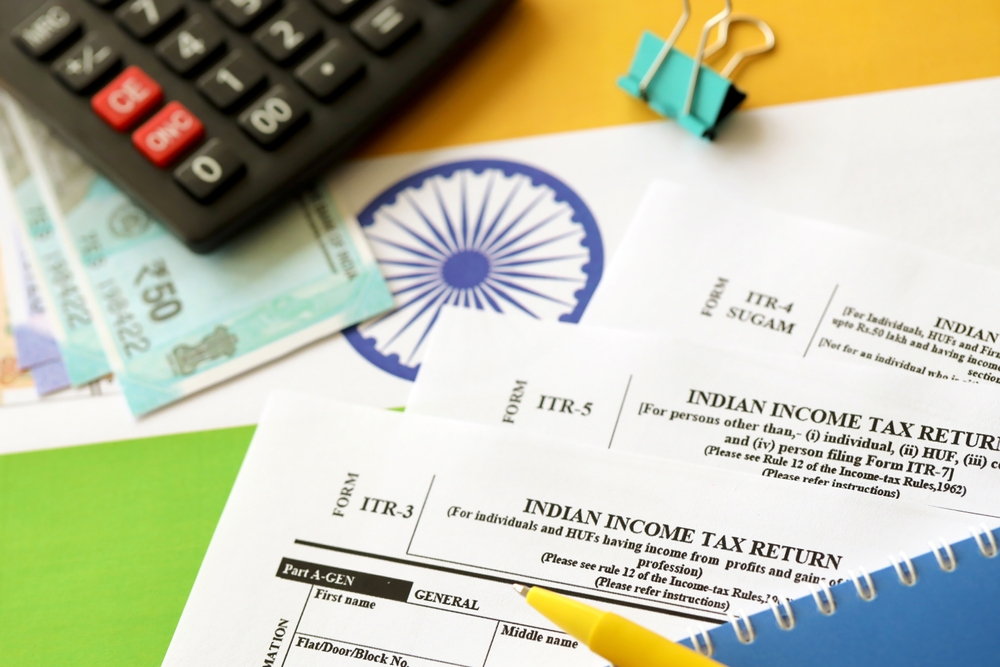
ITR or Income Tax Return filing is a crucial step in maintaining your financial health and staying compliant with Indian tax laws. It reflects your income, taxes paid, and eligibility for refunds or financial services like personal loans and visa applications. Whether you are a salaried professional, freelancer, business owner, or part of a larger organisation, knowing which ITR form to file matters. It helps avoid penalties, ensures smoother processing, and provides clarity to financial institutions.
Understanding which ITR to file depends on several factors, such as income type, amount, and your role in a business or company.
In this article, we'll walk you through each ITR form, who can file it, and how to choose the correct ITR form for your financial profile.
There are seven main types of ITR forms, each designed for specific types of income and taxpayer categories. Here is a breakdown to help you understand what ITR 1, 2, 3, 4, and beyond are.
ITR-1
ITR-1 is meant for resident individuals with simple income sources such as salary, one house property, and limited other income.
Who Can File:
- This form includes income from salary or pension.
- It applies if you have income from one house property.
- It covers other income, such as interest from savings or fixed deposits.
- It allows capital gains up to Rs. 1.25 Lakh without any losses to carry forward.
- It includes agricultural income up to Rs. 5,000.
Who Cannot File:
- Total income over Rs. 50 Lakhs
- More than one house property
- Income from business or profession
- Foreign assets or income
- Capital gains with losses
- Directors or shareholders of unlisted companies
ITR-2
ITR-2 is suitable for individuals or HUFs with income from salary, multiple house properties, capital gains, or foreign assets.
Who Can File:
- This form covers income from salary or pension.
- It applies if you own more than one house property.
- You can report taxable capital gains from shares, mutual funds, or property.
- It includes income from foreign assets or official accounts.
- Use this form if agricultural income exceeds Rs. 5,000.
Who Cannot File:
- Those with income from business or profession.
ITR-3
ITR-3 is designed for individuals or HUFs earning income from business or professional activities, including partnership income.
Who Can File:
- Individuals or HUFs earning income from a proprietary business or profession.
- Income from a business or profession where books of accounts are maintained or where an audit is required.
- Partners in a firm (income from the partnership firm).
- Investments in unlisted equity shares during the financial year.
- Income from house property, salary or pension, capital gains and other sources.
- Resident, RNOR and non-resident individuals with the above sources of income.
Who Cannot File:
- Taxpayers eligible for ITR-1, ITR-2, or ITR-4
ITR-4
ITR-4 is for resident individuals, HUFs, and firms opting for presumptive taxation under Sections 44AD, 44ADA, or 44AE.
Who Can File:
- Resident individuals, HUFs, and firms (other than LLPs).
- Total income up to Rs. 50 Lakhs.
- Business income under presumptive scheme (section 44AD or 44AE).
- Professional income under presumptive scheme (section 44ADA).
- Income from salary or pension.
- Income from one house property (excluding brought forward or carry forward loss).
- Income from other sources (excluding lottery and horse racing).
- Long-term capital gains income up to Rs. 1.25 Lakh (with no brought forward or carry forward losses).
Who Cannot File:
- Income above Rs. 50 Lakhs
- More than one house property
- Foreign income or assets
- Signing authority in any account located outside India
- Director in a company
- Investment in unlisted equity shares
- RNOR and non-residents
- Assessable to another person’s income
- Deferred tax on ESOPs
- Carried forward or brought forward losses under any income head
ITR-5
ITR-5 is used by entities not required to file under ITR-6 or ITR-7.
Who Can File:
- Firms
- LLPs (Limited Liability Partnerships)
- Association of Persons (AOPs)
- Body of Individuals (BOIs)
- Artificial Juridical Persons (AJPs)
- Estate of deceased or insolvent persons
- Business trusts and investment funds
ITR-6
ITR-6 applies to companies that do not claim exemptions under Section 11 (for charitable or religious purposes). The form must be filed electronically.
ITR-7
ITR-7 is intended for entities like trusts, political parties, and institutions required to file under specific sections of the Income Tax Act.
Who Can File: Persons (including companies) required to furnish returns under sections:
- 139(4A): Income from property held under trust for charitable or religious purposes.
- 139(4B): Political parties exceeding exemption limits.
- 139(4C): Scientific research associations, news agencies, institutions under 10(23A), 10(23B), etc.
- 139(4D): Universities or colleges not required to file under any other provision.
- 139(4E): Business trusts not required to file under any other provision.
- 139(4F): Investment funds under section 115UB.
What Is an ITR Form and Why Is It Important?
An ITR form is a standard format issued by the Income Tax Department that you use to report your income, deductions, taxes paid, and refunds claimed for a financial year. The ITR form meaning refers to how your income details are officially submitted to the government for tax assessment. Each ITR form is designed for a specific income type, such as salary, business, profession, or investments, which is why choosing the correct one is essential.
The importance of ITR filing lies in both legal compliance and financial record-keeping. Tax filing on time helps you meet statutory requirements under the Income Tax Act, avoid penalties, and claim eligible refunds. It also creates valid income proof, which is often required for loans, visas, and other financial applications.
Must Read: How to Check ITR Status?
Comparison Table for ITR Forms
Here is a quick comparison table to help you understand which ITR form to file for income from salary, house property, and other income sources:
|
ITR Form
|
Who Can File
|
Includes Salary
|
Business Income
|
Capital Gains
|
Foreign Assets
|
|
ITR-1
|
Resident individuals
|
Yes
|
No
|
Limited
|
No
|
|
ITR-2
|
Individuals, HUFs
|
Yes
|
No
|
Yes
|
Yes
|
|
ITR-3
|
Individuals, HUFs
|
Yes
|
Yes
|
Yes
|
Yes
|
|
ITR-4
|
Residents (presumptive scheme)
|
Yes
|
Yes
|
No
|
No
|
|
ITR-5
|
Firms, LLPs, AOPs
|
No
|
Yes
|
Yes
|
Yes
|
|
ITR-6
|
Companies
|
No
|
Yes
|
Yes
|
Yes
|
|
ITR-7
|
Trusts, institutions
|
No
|
Yes
|
Yes
|
Yes
|
Types of Forms to Support ITR Filing
Tax filing accurately starts with having the right documents. These forms summarise income and tax details.
Form 16
Form 16 is issued by your employer. It contains:
- Details of your salary
- Deductions under various sections
- TDS already paid
This is essential if you are wondering which ITR form is applicable for salaried employees.
Form 26AS
Form 26AS is an annual tax statement that includes:
- Tax deducted at source (TDS)
- Advance tax payments
- Self-assessment tax
It is useful for checking whether your tax credits match the ITR you are filing.
Form 15G and 15H
Form 15G and 15H are self-declaration forms submitted to lenders and financial institutions to prevent TDS on interest income, provided your total income is below the taxable threshold.
Form 15G: For individuals below 60 years.
What Happens When You File the Wrong ITR Form?
Filing the incorrect ITR form can lead to several issues. Wrong ITR form consequences include your return being marked defective under Section 139(9), which can delay processing and refunds. In some cases, the Income Tax Department may reject the return altogether or issue notices seeking clarification. Repeated filing mistakes can also attract penalties and raise compliance concerns, especially if income is under-reported.
If you realise the mistake, you can file an ITR correction by submitting a revised return within the allowed timeline. The revised return replaces the original one and allows you to choose the correct ITR form. Acting early helps avoid penalties, reduces scrutiny, and ensures your tax records remain accurate and legally compliant.
Must Read: E-Verification of Income Tax Return(ITR) – Complete Guide
Who Is Required to File an ITR in FY 2025–26?
You are required to file an Income Tax Return for FY 2025–26 if your total income exceeds the basic exemption limit under the applicable tax regime. Filing is also mandatory if you earn income from a business or profession, have capital gains, or hold foreign assets. Individuals must file ITR if TDS exceeds the prescribed limits or if they meet the specified high-value transaction criteria.
Businesses and professionals must file returns based on turnover or receipt thresholds, even if income is below exemption limits. An accurate tax filing process ensures legal compliance and accurate reporting of income.
Why Should You File ITR?
The importance of ITR goes beyond meeting a legal requirement. Tax return filing helps you claim eligible refunds, especially when excess TDS has been deducted. It also acts as valid income proof, which improves your eligibility for financial products.
Since many lenders review your recent ITR filings to assess repayment capacity and financial discipline, the return becomes an essential part of personal loan documents and supporting paperwork for other forms of credit.
Other benefits of filing ITR include carrying forward losses, avoiding penalties, and maintaining a clean tax record. Even when tax return filing is not mandatory, it strengthens your financial credibility.
Types of Forms to File Income Tax Returns
The ITR forms list consists of multiple return types, each created for a specific category of taxpayer. Salaried individuals with straightforward income sources generally file ITR-1, while those with capital gains or more than one house property typically use ITR-2.
Business owners and professionals who maintain books of accounts must file ITR-3, whereas taxpayers opting for the presumptive taxation scheme under Sections 44AD, 44ADA, or 44AE file ITR-4.
Entities such as firms, LLPs, and associations fall under ITR-5, companies that do not claim exemptions under Section 11 file ITR-6, and trusts or institutions file ITR-7.
Understanding the types of ITR forms ensures you select the correct return and avoid common tax filing mistakes.
Should You File ITR?
Income Tax Return filing is mandatory under certain conditions, even if your income is below the basic exemption limit. You must file ITR if any of the following apply:
- You have deposited over Rs. 1 crore in one or more current accounts during the financial year.
- You have deposited over Rs. 50 Lakhs in one or more savings bank accounts.
- You have spent more than Rs. 2 Lakhs on foreign travel, either for yourself or for anyone else.
- Your electricity bill exceeded Rs. 1 Lakh in the previous year.
- TDS or TCS during the year was more than Rs. 25,000 (Rs. 50,000 for senior citizens above the age of 60).
- Your business turnover crossed Rs. 60 Lakhs.
- Your professional receipts exceeded Rs. 10 Lakhs.
Conclusion
Choosing the right ITR form isn't just about ticking a compliance box – it’s a reflection of your financial identity. Understanding the difference between ITR 1, 2, 3, 4, 5, 6, and 7 ensures that your tax return accurately represents your income, whether it’s from a salary, house property, business, or other sources.
Knowing which ITR form to file also enhances your financial credibility, which can be especially useful when considering financial services like a personal loan.
For instance, when you apply for a personal loan for salaried employees, lenders often refer to your ITR documents to assess your repayment capacity and income stability. Filing the correct ITR form on time and with proper documentation can strengthen your personal loan eligibility, making the approval process quicker and smoother.
Seeking financial support to fund your goals? SMFG India Credit can help. Check your eligibility and apply online for loans of up to Rs. 10 Lakhs* at competitive personal loan interest rates and flexible repayment tenures. Before submitting your application, use our EMI calculator and eligibility calculator to plan your finances with confidence.