GST 2.0, effective from 22nd September 2025 , marks the next-generation overhaul of India’s tax system. These GST reforms 2025 aim to simplify taxation, reduce rates, and make compliance easier for households, Micro, Small and Medium Enterprises (MSMEs) and small businesses. With two primary slabs of 5% and 18%, plus 40% for sin and luxury goods , GST 2.0 India affects affordability, production, and business growth.
What Is GST 2.0 and Why Does It Matter?
GST 2.0 is a structured reform to streamline India’s Goods and Services Tax. It corrects inverted duty structures, simplifies compliance, and introduces new GST slab rates. The GST Council and Central Board of Indirect Taxes and Customs (CBIC), under the Ministry of Finance (India), designed these new GST reforms 2025 to benefit consumers, farmers, and MSMEs.
Enterprises adapting to GST 2.0 should stay updated, especially if considering financing through business loan or MSME loan options.
Key GST Reform News Points:
- Simplified new GST slab rates 2025: 5% & 18%
- Sin and luxury goods are taxed at 40%
- GST exemption on life and health insurance premiums
- Lower compliance burden for MSMEs and small businesses
Key Highlights of GST 2.0 in India (2025)
India’s GST changes 2025 include:
- Simplified GST new slabs – reduced four slabs (5%, 12%, 18%, 28%) to two main slabs.
- Essentials and many FMCG items are now under 5% GST.
- Several consumer durables are taxed at 18% instead of 28%, highlighting the positive impact of GST on the Indian economy.
- Housing and construction materials enjoy lower construction GST rates.
- Reduced GST on automobiles and farm equipment.
- Healthcare products and services see healthcare GST rate reductions.
- Services like gyms and salons now attract 5% GST instead of 18%.
10 Essential GST 2.0 Reforms Explained
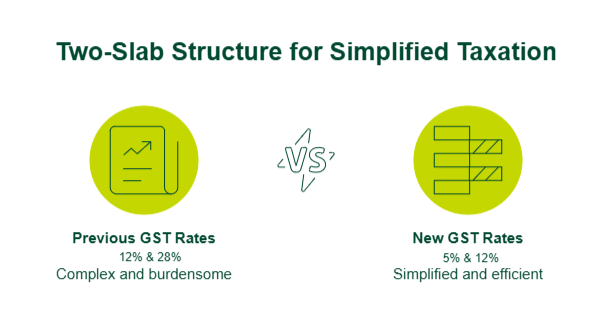
Two-Slab Structure for Simplified Taxation
The new GST reforms include 5% rate for essentials and 18% for other goods, replacing the previous rates of 12% and 28%. This reduces household and business financial burdens while simplifying compliance.
Life Insurance Now GST-Free
GST-free life insurance ensures that policies like term, endowment, and ULIPs enjoy GST exemption, encouraging household savings and investment while maintaining compliance with regulations like the Prevention of Money Laundering Act (PMLA).
Essentials and Packaged Foods Cheaper
Daily items like soaps, toothpaste, and certain FMCG products now fall under 5% GST. FMCG GST rate reduction supports domestic production, aligning with Atmanirbhar Bharat initiatives.
Healthcare and Medicines GST Reduction
Healthcare GST rate cuts make life-saving drugs and medical devices more affordable. Manufacturers can also claim Input Tax Credit (ITC), improving production efficiency.
Electronics and White Goods Rate Cut
|
Item
|
Old GST
|
New GST
|
|
TV >32"
|
28%
|
18%
|
|
Air Conditioners
|
28%
|
18%
|
|
Refrigerators
|
28%
|
18%
|
|
Washing Machines
|
28%
|
18%
|
Housing and Construction Materials Become Cheaper
Lower construction GST rates on cement, marble, and bricks make housing affordable, a prime time for those exploring Loan Against Property options.
Auto Sector Relief
Automobile GST 2025 reductions lower costs on two-wheelers, small cars, and parts, improving affordability and manufacturing competitiveness.
Agriculture and Farm Equipment Reforms
Lower agriculture GST rates on tractors, irrigation systems, and bio-pesticides reduce costs for farmers and promote sustainable practices.
Lower GST for the Service Sector
The service sector GST 2025 applies a 5% tax to hotels (up to INR 7,500/day) , gyms, salons, and yoga classes, supporting domestic tourism and employment.
Price Impact
The impact of GST 2.0 is evident as many businesses have reduced prices, boosting purchasing power.
Must Read: Impact of GST on Small and Medium Enterprises
GST Timeline: How the Reforms Unfold
The GST reforms timeline in 2025 is as follows:
- 15th August 2025: New GST reforms
- 3rd September 2025: GST Council approves reforms.
- 22nd September 2025: Implementation across India, i.e., the GST 2.0 launch date.
The Central Board of Indirect Taxes and Customs (CBIC) and Goods and Services Tax Network (GSTN) ensure the smooth execution of Central Goods and Services Tax (CGST), State Goods and Services Tax (SGST), and Integrated Goods and Services Tax (IGST).
Must Read: Difference Between CGST, SGST & IGST
How GST 2.0 Impacts Businesses and MSMEs
Simpler GST for MSME (Micro, Small, and Medium Enterprises) reduces costs and administrative load. Input Tax Credit (ITC) reforms, along with a streamlined GST registration and GST return filing process help improve cash flow.
Broader Economic Impact of GST 2.0
Economic growth through GST reforms 2025 is driven by lower rates and structural simplification. These reforms support Atmanirbhar Bharat, strengthen MSMEs and small businesses, and improve manufacturing, consumption, and formalisation in line with digital India initiatives.
Coordination with bodies like NITI Aayog, the Reserve Bank of India (RBI), the Ministry of Finance (India), the Economic Survey of India, and the Income Tax Department supports smoother implementation, while tax rationalisation improves efficiency.
Challenges & Risks Ahead
- Ensuring timely GST return filing from all vendors.
- Monitoring GST compliance among small traders.
- Implementation issues in the new digital GST system.
- ITC mechanism adjustments to prevent misuse.
Benefits of GST 2.0 for India
- Fewer GST slab rates for easier compliance.
- Lower tax burden on essentials, electronics, and services.
- Boost to domestic manufacturing and MSMEs.
- Transparent taxation and a predictable fiscal environment.
Conclusion: A Simpler, Stronger GST for India
GST 2.0 aims to simplify taxation, improve affordability, and strengthen compliance across sectors. With the GST reforms 2025, households benefit from lower prices, while MSMEs and small businesses gain greater clarity and ease of doing business.
As enterprises adapt to these structural changes – from upgrading their digital infrastructure to training staff on new compliance requirements – access to timely financing becomes essential.
SMFG India Credit offers tailored small business loans or working capital loans to support MSMEs during this transition. Check your eligibility and apply online, or contact us today for more details.