When you need money from your mutual funds, you generally have two options: borrow against your holdings or sell some of your mutual fund units. Both can provide liquidity, but they work differently. One allows you to stay invested while borrowing against your holdings, while the other provides cash by reducing your investment.
In this Loan Against Mutual Funds vs redemption comparison, you will see how both options can affect your investment, costs, taxes, potential returns, and repayment obligations as investors. Understanding these differences can help you decide which option is better suited to your financial goals and repayment capacity.
What Is a Loan Against Mutual Funds?
The Loan Against Mutual Funds (LAMF) meaning refers to a type of Loan Against Securities (LAS) in which eligible mutual fund units are used as collateral.
Instead of selling your investment, you pledge mutual fund units for a loan and borrow against their value. A lien is marked on the pledged units, while the units remain invested. However, you generally cannot redeem the pledged units until the lien is released.
The amount you can borrow depends on factors such as the type and value of the pledged units, the lender's policies, and the applicable Loan-to-Value (LTV) ratio.
How Does a Loan Against Mutual Funds Work?
The Loan Against Mutual Funds process allows you to borrow against eligible investments without selling them. Depending on the lender or NBFC, the borrowing may be sanctioned as a loan limit or an overdraft facility, subject to individual policies. Here is how it generally works:
- Select Eligible Units: Identify the mutual fund units accepted for lending.
- Submit Your Application: Apply to pledge mutual funds for a loan with your chosen financial institution.
- Create a Lien: The institution initiates lien marking, creating a mutual fund lien on the selected units.
- Access the Funds: Once approved, you can use the sanctioned amount as permitted.
- Repay the Borrowing: Complete the required repayment of interest and principal.
- Remove the Lien: After dues are cleared, lien release takes place. Until then, pledged units generally cannot be redeemed.
What Is Mutual Fund Redemption?
The mutual fund redemption meaning is simply the process of selling some or all of your investment in a mutual fund scheme. When you redeem mutual fund units, the request is processed by the Asset Management Company (AMC) at the applicable Net Asset Value (NAV), subject to the relevant cut-off time and other conditions.
The corresponding number of mutual fund units is then deducted from your folio, and the redemption proceeds are generally credited to your registered bank account within the applicable settlement timeline. Unlike borrowing against your investment, redemption permanently reduces the number of units you hold.
How Does Mutual Fund Redemption Work?
The mutual fund redemption process can usually be completed through the AMC, an investment platform, a Registrar and Transfer Agent (RTA) such as Computer Age Management Services (CAMS) or KFin Technologies, or eligible depository channels linked to National Securities Depository Limited (NSDL) or Central Depository Services (India) Limited (CDSL).
- Access Your Investment: Log in through the relevant channel to redeem mutual funds online.
- Choose the Scheme: Select the fund and units you want to redeem fully or partially.
- Confirm the Request: Submit your instruction within the applicable cut-off requirements.
- Process the Redemption: The request is processed at the applicable NAV.
- Receive the Proceeds: The money is credited according to the applicable settlement timeline. An exit load and capital gains tax may apply depending on the scheme and holding period.
Loan Against Mutual Funds vs Redemption: Quick Comparison
A Loan Against Mutual Funds or redemption decision largely comes down to whether you want temporary access to funds while staying invested or prefer to sell your holdings with no repayment obligation. This loan vs redemption of mutual funds overview highlights the main differences before you pledge vs redeem mutual funds.
Comparison Table: LAMF vs Redemption
|
Parameter
|
Loan Against Mutual Funds
|
Mutual Fund Redemption
|
|
Ownership
|
Units remain invested but are marked with a lien.
|
Units are sold, and ownership ends for the redeemed portion.
|
|
Liquidity
|
Funds are available within the sanctioned Loan-to-Value limit.
|
Sale proceeds provide liquidity based on the applicable NAV.
|
|
Cost
|
Interest applies to the amount borrowed.
|
No borrowing interest, though an exit load on mutual funds may apply.
|
|
Tax Impact
|
No capital gains tax arises merely from taking the loan.
|
Capital gains tax on mutual funds redemption may apply when units are redeemed at a profit.
|
|
Market Participation
|
Pledged units remain invested and continue to participate in market movements.
|
Redeemed units no longer participate in future market movements.
|
|
Repayment Obligation
|
Principal and interest require repayment according to the facility terms.
|
No repayment obligation applies.
|
|
Things to Consider
|
A fall in the value of pledged units may require additional collateral or repayment, depending on lender policy.
|
Selling means giving up potential future growth on the redeemed units.
|
|
Loan-to-Value
|
The borrowing amount is limited by the applicable Loan-to-Value ratio.
|
Not applicable, as the units are sold rather than pledged.
|
|
Tax Advantages
|
Borrowing against the units does not itself trigger capital gains taxation.
|
No specific tax advantage; applicable taxation depends on the nature and holding period of the investment.
|
|
Interest Rates
|
Loan Against Mutual Funds interest rates vary according to the lender and facility terms.
|
Not applicable.
|
|
When to Choose
|
May suit short-term funding needs when you want to remain invested and can manage repayment.
|
May suit situations where you prefer to access your investment without taking on debt.
|
This Loan Against Mutual Funds vs mutual funds redemption comparison shows there is no universal winner. The suitable choice depends on your funding needs, ability to repay, and investment outlook.
Cost Comparison: Interest Cost vs Tax and Exit Load
The Loan Against Mutual Funds cost mainly depends on the applicable interest rate and other loan charges, such as a processing fee. You should also account for the possibility of a margin shortfall if the value of pledged units falls.
Redemption has a different cost structure. Depending on the scheme and holding period, mutual fund redemption tax in the form of capital gains tax may apply, along with an exit load on mutual funds where applicable.
|
Cost Factor
|
Loan Against Mutual Funds
|
Mutual Fund Redemption
|
|
Primary Cost
|
Interest on the borrowed amount
|
Tax on taxable capital gains
|
|
Additional Cost
|
Processing and other applicable charges
|
Exit load, if applicable
|
|
What Affects the Cost
|
Amount borrowed, rate, tenure and lender terms
|
Holding period, gains and scheme terms
|
The more suitable option depends on how urgently you need the funds, how long you have held the investment, and the total cost involved.
Tax Impact of Loan Against Mutual Funds vs Redemption
The Loan Against Mutual Funds tax treatment differs from mutual fund redemption tax because pledging units for a loan does not involve selling them and, therefore, does not trigger capital gains tax.
Redemption at a profit, however, may attract capital gains tax on mutual funds. For an equity mutual fund, eligible LTCG exceeding the aggregate exemption limit of Rs. 1.25 lakhs in a financial year is taxed at 12.5% under Section 112A of the Income Tax Act. On the other hand, STCG is taxed at 20% under Section 111A. These rates apply to relevant transfers made on or after 23 July 2024.
Factors to Consider: Loan Against Mutual Funds vs Redemption
Borrowing against your holdings comes with ongoing interest payments, so the Loan Against Securities interest rate can affect the overall borrowing cost. A fall in the value of pledged units may also lead to a margin call. In case of default, the lender may initiate a forced redemption of the pledged units, while you generally cannot redeem them yourself until the lien is removed.
With redemption, an exit load and tax on capital gains may apply. Market timing also matters, as selling during a downturn can lock in a lower value and end any future growth from the redeemed units.
|
Factor
|
Loan Against Mutual Funds
|
Mutual Fund Redemption
|
|
Ongoing Commitment
|
Interest and repayment continue until dues are cleared.
|
No repayment obligation after redemption.
|
|
Change in Unit Value
|
A substantial decline may require additional funds or collateral.
|
The value received depends on the applicable NAV when redemption is processed.
|
|
Access to Units
|
Pledged units generally cannot be redeemed until the lien is released.
|
Redeemed units are no longer part of the investment.
|
|
Long-Term Participation
|
Units remain invested while pledged.
|
Future growth on the redeemed units is no longer available.
|
Loan Against Mutual Funds vs Personal Loan vs Redemption
The choice between Loan Against Mutual Funds vs personal loan vs redemption depends on how you want to access funds. LAMF is a secured loan, with eligible mutual fund units used as collateral, while a personal loan is typically an unsecured loan that does not require you to pledge investments. Redemption involves selling units rather than borrowing.
When comparing LAMF vs a personal loan, the applicable interest rate and repayment terms are important considerations. A loan vs redemption decision also involves taxes and whether you want to stay invested.
|
Option
|
How It Works
|
May Be Suitable When
|
|
Loan Against Mutual Funds
|
Borrow against eligible mutual fund holdings while the pledged units remain invested.
|
You need temporary funds, can manage repayments and prefer not to sell your investment.
|
|
Personal Loan
|
Borrow without pledging mutual fund units or other security.
|
You do not want to pledge or sell investments and meet the lender's eligibility requirements.
|
|
Redemption
|
Sell some or all mutual fund units and receive the proceeds.
|
You prefer using your invested funds rather than taking on a repayment obligation.
|
Loan Against Mutual Funds Eligibility
Mutual fund loan eligibility considers both the applicant and the investments being pledged. While specific LAMF eligibility requirements vary by lender, the assessment may cover the following:
- Applicant Details: Your KYC should be complete, and you must meet the applicable age requirements. The lender may also review your credit profile as part of the assessment.
- Folio Ownership: The mutual fund folio should meet the lender's ownership and holding requirements.
- Scheme Acceptance: Only eligible mutual funds for loan can be pledged, so your investment must be in an eligible scheme accepted by the lender.
- Investment Value: Your portfolio value may need to meet the minimum threshold specified for the facility.
- Lien Eligibility: The selected units must be eligible for lien marking.
Please note that these are basic requirements. The final eligibility will depend on several factors, including the lender's policies at the time of application.
How to Apply for a Loan Against Mutual Funds
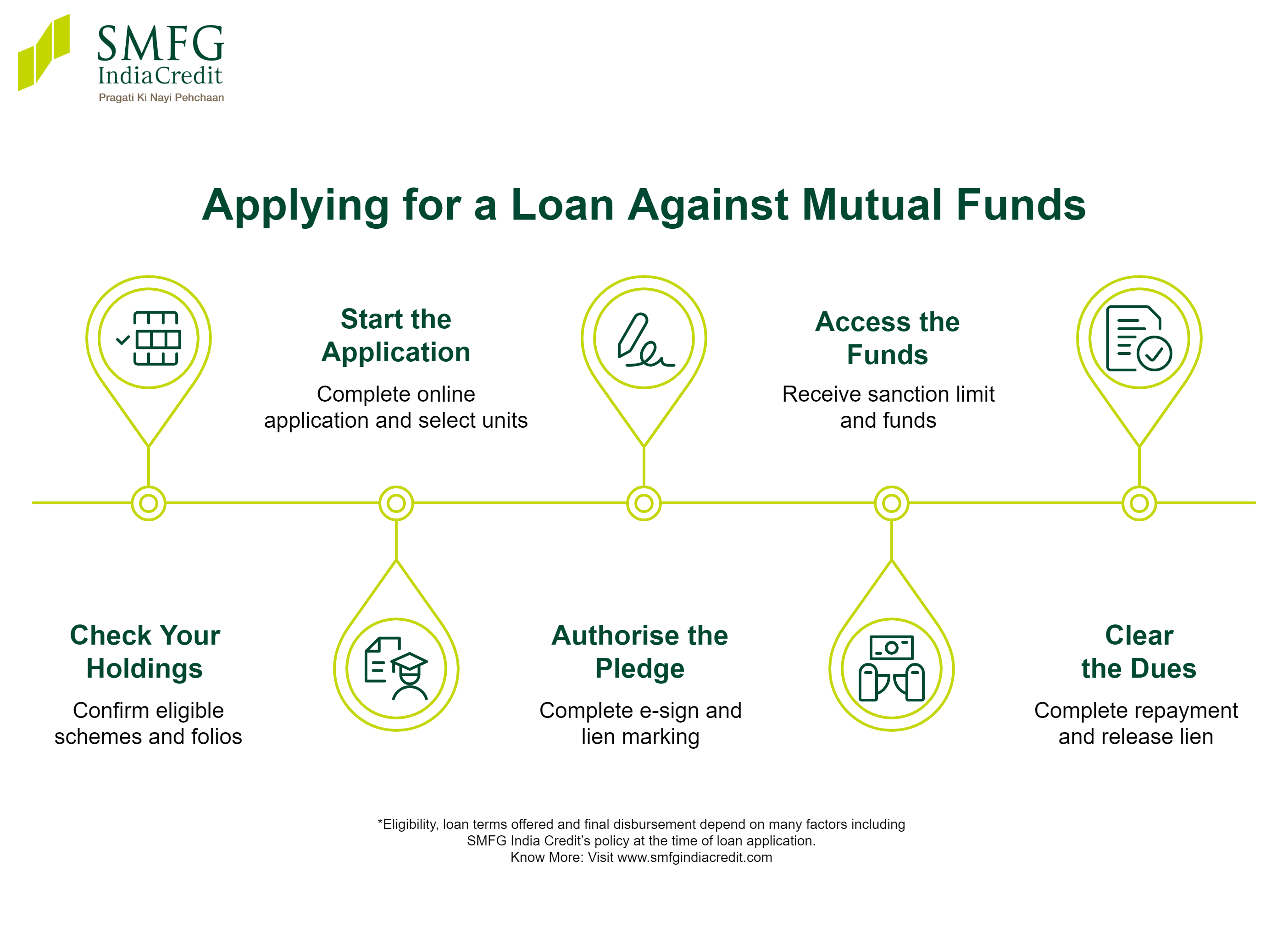
You can generally apply for a Loan Against Mutual Funds through a lender or an eligible digital platform. The exact process for obtaining a Loan Against Mutual Funds online may vary by lender.
- Check Your Holdings: Confirm which schemes and folios are eligible.
- Start the Application: Complete the online application and select the units you want to pledge mutual funds online.
- Authorise the Pledge: Complete the required e-sign and lien marking formalities.
- Access the Funds: Once approved, a sanction limit is assigned according to the lender's terms.
- Clear the Dues: Complete repayment as agreed, after which the lien on the pledged units can be released.
Depending on the securities you hold, you may also consider alternatives such as a Loan Against Bonds or a Loan Against Shares.
Conclusion
The Loan Against Mutual Funds vs redemption decision should involve why you need the money and how it fits your investment goals. A Loan Against Mutual Funds may suit short-term needs when your repayment capacity is strong, and you want to retain the potential for compounding. Mutual fund redemption may be more appropriate for a permanent funding need, portfolio rebalancing, or when taking on repayment is not suitable. When comparing these mutual fund liquidity options, consider the tax impact, applicable costs, and Securities and Exchange Board of India (SEBI) regulations.
If you prefer to borrow against your investments rather than sell them, SMFG India Credit offers a Loan Against Securities against eligible mutual funds, bonds, shares, and ETFs. Check the applicable Loan Against Securities eligibility and document requirements, along with interest rates and other associated charges, and apply online with ease.