Introduction to GST on Bikes and Two-Wheelers in India
GST on bikes and two-wheelers in India directly affect the ex-showroom pricing of motorcycles, scooters, and electric vehicles. Buyers generally pay GST as part of the final vehicle cost at the time of purchase. While conventional petrol-powered two-wheelers attract higher GST rates, the electric bike GST rate in India remains comparatively lower to encourage EV adoption. Recent GST-related revisions and policy discussions applicable from September 2025 have continued to influence pricing trends, affordability, and consumer demand across the Indian two-wheeler market.
What Is GST on Bikes in India?
GST is charged on the purchase of both new and used two-wheelers in India, including motorcycles and scooters. GST on two-wheeler purchases is generally included in the ex-showroom price paid by buyers at dealerships. The applicable bike GST rate depends on factors such as vehicle type and engine category. GST on motorcycles in India and GST on used bikes in India may differ depending on resale conditions and applicable taxation rules.
For example, if a scooter has an ex-showroom price of Rs. 1 lakh and attracts 18% GST, the applicable GST amount is generally included within the displayed ex-showroom cost.
Latest GST Rates on Bikes and Two-Wheelers (2026)
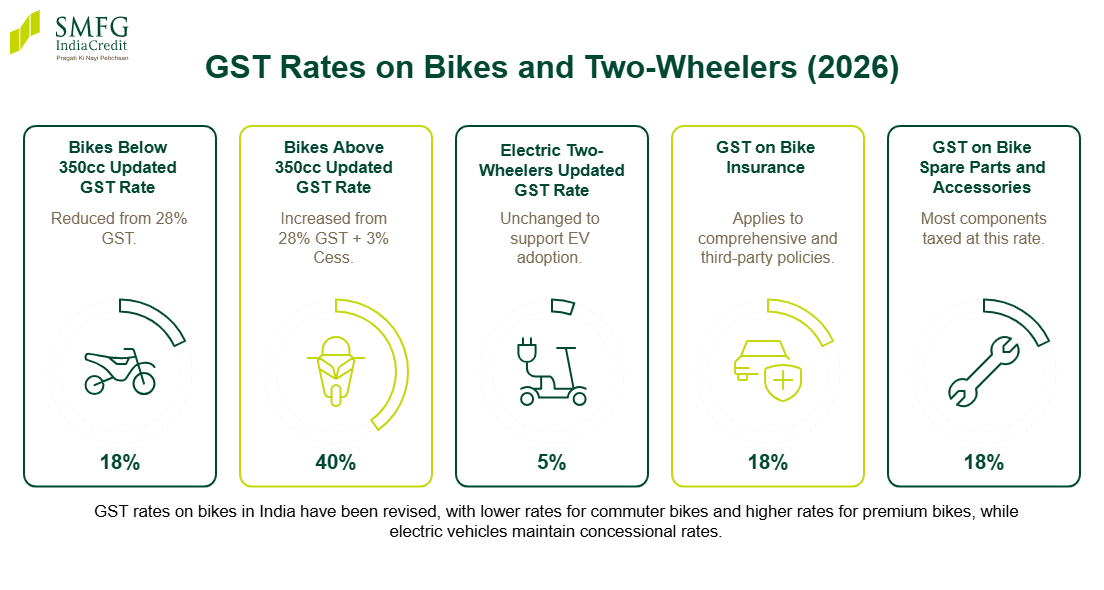
Recent GST revisions effective from September 2025 have changed the taxation structure for several motorcycle categories. The updated bike GST slab 2026 applies lower GST rates to many commuter motorcycles, while premium bikes above 350cc now attract higher taxation. GST on bikes also differs for electric vehicles, with GST on EV scooters continuing at concessional rates to support EV adoption.
|
Bike Category
|
Previous GST Rate
|
Updated GST Rate
|
|
Bikes Below 350cc
|
28% GST
|
18% GST
|
|
Bikes Above 350cc
|
28% GST + 3% Cess
|
40% GST
|
|
Electric Two-Wheelers
|
5% GST
|
5% GST
|
GST on Bikes Below 350cc
Commuter and mid-range motorcycles below 350cc now attract a reduced two-wheeler GST rate of 18% from September 2025 onwards. This category includes models such as Hero HF Deluxe, Honda Dio 125, TVS Apache RTR/RR 310, and Classic 350 under GST on Royal Enfield bikes. The reduction from the earlier 28% GST slab may help improve affordability for many everyday buyers.
GST on Bikes Above 350cc
Premium motorcycles above 350cc now attract a higher 40% bike GST slab, which has increased ex-showroom prices for several performance-oriented models. This category generally includes GST on premium motorcycles such as Royal Enfield Himalayan 450, Interceptor 650, KTM 390 Duke series, and Bajaj-Triumph motorcycles, resulting in noticeably higher purchase costs for buyers.
GST on Electric Bikes and Scooters
Electric two-wheelers in India generally attract a lower 5% GST rate to encourage EV adoption and support cleaner mobility solutions. This concessional tax structure benefits buyers by reducing the bike price after GST compared to many petrol-powered models. The lower GST impact on two-wheelers in the EV segment has also supported faster growth in the electric mobility market.
Popular electric scooters and bikes benefiting from 5% GST include:
- Ola Electric scooters
- Ather electric scooters
- TVS iQube
- Bajaj Chetak EV
The lower scooty GST rate may help improve affordability for EV buyers.
HSN Code for Bikes and Two-Wheelers
Most motorcycles, scooters, and electric two-wheelers in India are generally classified under HSN Code 8711 for GST invoicing and taxation purposes. The HSN code for motorcycles helps businesses apply the correct rates and maintain accurate tax documentation under GST on two-wheeler transactions.
|
Product Type
|
HSN Code
|
|
Motorcycles
|
HSN Code 8711
|
|
Scooters
|
HSN Code 8711
|
|
Electric Two-Wheelers
|
HSN Code 8711
|
GST on Bike Insurance
Bike insurance premiums in India generally attract 18% GST in addition to the base insurance cost. This applies to both comprehensive insurance and third-party insurance policies. The applicable bike GST on insurance increases the final premium amount paid by vehicle owners under GST on two-wheeler insurance services.
For example, if a bike insurance premium is Rs. 5,000, an additional 18% GST of Rs. 900 may apply, making the total payable premium approximately Rs. 5,900.
GST on Used Bikes and Second-Hand Two-Wheelers
GST may apply on used and second-hand two-wheelers depending on whether the seller is a registered dealer or an individual owner. Under the margin scheme, registered dealers generally pay GST only on the profit margin earned on resale instead of the full vehicle value. GST on bikes sold directly between individuals without business involvement may not usually apply. Dealers selling second-hand vehicles may also issue a GST invoice where applicable, while private individual-to-individual sales are generally treated differently under GST provisions.
GST on Bike Spare Parts and Accessories
Bike spare parts and accessories are generally taxed separately from the vehicle under GST provisions. Most components used in two-wheeler maintenance and customisation currently attract 18% GST after recent rate revisions.
|
Spare Part / Accessory Category
|
Applicable GST Rate
|
|
Helmets and riding gear
|
18%
|
|
Tyres and rubber tubes
|
18%
|
|
Seat covers and bike covers
|
18%
|
|
Mirrors, engine parts, and fittings
|
18%
|
Input Tax Credit (ITC) on Bikes Under GST
Businesses are generally not allowed to claim Input Tax Credit (ITC) on bike purchases under Section 17(5)(a) of the CGST Act. However, certain exceptions are permitted where motorcycles are used for specific business purposes.
ITC may be allowed in cases such as:
- Passenger transportation or public transportation services
- Driving schools and rider training centres
- Businesses engaged in resale of bikes
Impact of GST on Bike Prices in India
The GST structure for motorcycles has influenced vehicle pricing differently across segments. Recent GST reductions for bikes below 350cc have helped lower ex-showroom prices for several commuter and mid-range models, while GST on superbikes and other high-capacity motorcycles has increased the cost of premium models due to higher tax rates.
Examples of estimated price impact:
- A motorcycle priced at Rs. 2 lakhs may see a lower tax burden following the reduction from 28% to 18% GST.
- A premium bike priced at Rs. 4 lakhs may experience a higher on-road cost under the revised 40% GST slab.
Comparison of GST Rates on Petrol vs Electric Two-Wheelers
Electric two-wheelers currently enjoy lower GST rates compared to petrol-powered motorcycles and scooters, helping improve EV affordability and encourage cleaner mobility adoption in India. Government incentives and concessional taxation have further strengthened the appeal of electric two-wheelers for cost-conscious buyers.
|
Vehicle Type
|
GST Rate
|
Government Incentives
|
|
Petrol Bikes and Scooters
|
18% or 40% depending on engine size
|
Limited direct GST incentives
|
|
Electric Bikes and Scooters
|
5% GST
|
EV subsidies and state incentives available
|
|
Premium Electric Two-Wheelers
|
5% GST
|
Eligible for selected EV benefits and schemes
|
Benefits of Reduced GST on Two-Wheelers
Reduced GST rates on several two-wheelers have improved affordability for many consumers, especially in the commuter motorcycle segment. Lower taxation may also support higher demand among daily commuters, first-time buyers, rural customers, and entry-level motorcycle users across India.
Key benefits of reduced GST on two-wheelers include:
- Lower purchase costs for commuters
- Improved affordability for first-time buyers
- Better accessibility in rural markets
- Increased demand for entry-level motorcycles and scooters
- Potential growth in overall two-wheeler sales
Financing Options for Buying a Two-Wheeler
For buyers planning to purchase a new motorcycle or scooter, a two-wheeler loan may help manage upfront vehicle costs more comfortably. A personal loan can also be a suitable financing option, especially for higher-end models or buyers looking for greater flexibility in vehicle-related expenses.
Before applying, borrowers should compare personal loan or two-wheeler loan interest rates carefully to assess repayment suitability and plan monthly budgets more effectively alongside vehicle ownership expenses.
Conclusion
Bike GST rates continue to influence two-wheeler affordability, consumer demand, and EV adoption across India. Periodic revisions and recommendations by the GST Council also play an important role in shaping overall vehicle pricing and taxation policies.
For buyers planning to purchase a motorcycle or scooter, SMFG India Credit offers tailored two-wheeler loan solutions to help manage vehicle costs more conveniently.
Check your two-wheeler loan eligibility online and apply with a simple digital process.