The RBI guidelines for personal loan recovery are designed to balance the rights of borrowers with the legitimate interests of lenders. These personal loan recovery rules establish a fair and transparent framework for recovering dues while protecting borrowers from harassment, intimidation, or unfair practices. Under the RBI guidelines for recovery of loans, regulated entities and their recovery agents are expected to follow ethical conduct, respect borrower privacy, and comply with prescribed procedures. Understanding the personal loan recovery process helps borrowers know their rights and responsibilities if they face repayment difficulties.
What Is Personal Loan Recovery and Why Do RBI Guidelines Matter?
Personal loan recovery is the process through which lenders recover unpaid dues from borrowers who have defaulted on their loan repayments. It generally begins with payment reminders and follow-ups after missed EMIs before progressing to a more formal loan recovery process, where necessary.
This is where RBI recovery rules matter. The Reserve Bank of India (RBI) regulates how lenders and recovery agents conduct recovery activities to ensure that the process remains fair, transparent, and respectful of borrowers' rights. Without these rules, borrowers could be exposed to aggressive calls, public embarrassment, or other unfair recovery practices.
Loan Recovery Methods
Financial institutions, including NBFCs, use several loan recovery methods before they consider legal action. The debt recovery process usually moves from gentle reminders and negotiations to firmer steps. Common personal loan collection methods include:
- Non-judicial Methods: Direct communication, negotiation, restructuring, or asset recovery in the case of secured loans.
- Judicial Methods: Legal action through courts or tribunals, where necessary and in accordance with applicable laws.
RBI Guidelines for Personal Loan Recovery: Key Rules Every Borrower Should Know
The RBI guidelines for recovery of loans apply to all commercial lenders, NBFCs, and their recovery agents.
Here are the core RBI guidelines for loan recovery agents that every borrower should know:
- Fair Recovery Practices: Harassment, threats, intimidation, or abusive language are strictly prohibited.
- Rules for Recovery Agents: Agents must be properly trained and authorised, carry valid identification, and borrowers should be informed before they are assigned.
- Borrower Rights: You have the right to receive details of your outstanding loan amount, interest calculations, and repayment schedule, while your privacy and dignity must be protected.
- Transparent Communication: Any loan settlement offer or revised repayment plan should be clearly communicated in writing.
RBI Rules on Recovery Agent Timings
Under RBI guidelines for recovery agents, borrowers can be contacted only between 8 AM and 7 PM, from Monday to Saturday. No contact is allowed on Sundays and holidays. Calls or visits outside these hours are not permitted, regardless of the urgency of the matter.
RBI Rules for Recovery Agent Conduct
Beyond timing, the recovery agent rules set clear limits on behaviour. The RBI loan recovery agent rules separate what is acceptable from what is not, and the borrower harassment rules are strict.
Agents may:
- Contact you about overdue payments within permitted hours
- Request repayment on outstanding dues
- Explain settlement options
Agents may not:
- Use abusive language, threats, or physical force
- Disclose debt details to family, neighbours, or coworkers
- Visit or call outside 8 AM to 7 PM
- Gain access to a borrower’s phone contacts and gallery, or try digital intimidation
Borrower Privacy Protection Under RBI Guidelines
RBI guidelines require lenders and recovery agents to keep borrower information confidential. Loan details cannot be shared with unauthorised third parties or individuals, and all recovery communication must be handled discreetly to protect the borrower's privacy and dignity. Lenders and financial institutions must ensure that the agents are trained on loan recovery privacy rules and regulations. The aim is simple: a default or missed EMIs (Equated Monthly Instalments) is a private matter between you and your lender, and recovery efforts must respect the borrower's privacy rights.
Step-by-Step Personal Loan Recovery Process in India
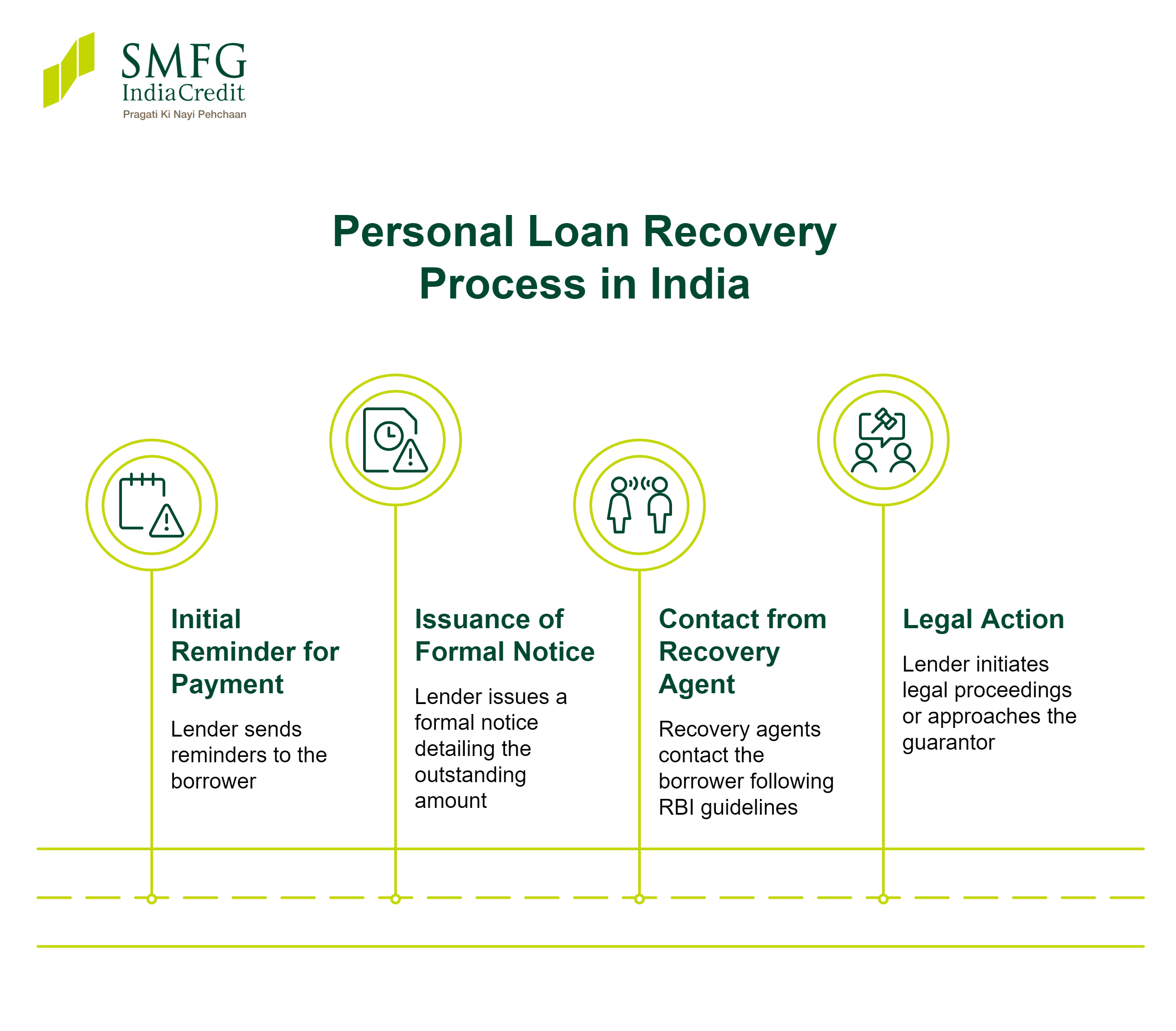
Here is how the recovery process in India typically unfolds:
- Initial Reminder for Payment
The lender first sends reminders through calls, messages, or emails about the missed payment.
- Issuance of Formal Notice
If the dues remain unpaid, the lender issues a formal notice detailing the outstanding amount and repayment timeline. The borrower must be given a reasonable time to respond before stronger actions are initiated.
- Contact from Recovery Agent
Authorised recovery agents may contact the borrower, but they must follow RBI guidelines on conduct and communication.
- Legal Action
If all prior efforts fail and the loan remains unpaid, the lender may initiate legal proceedings or approach the guarantor, where applicable.
Responsibilities of Borrowers During Loan Recovery
During the recovery process, borrowers also have certain loan repayment responsibilities. Maintaining timely and transparent communication with the lender can help resolve repayment issues more effectively and may improve the chances of reaching a mutually acceptable solution.
Borrowers' duties include:
- Reviewing loan statements and monitoring their loan account regularly.
- Informing the lender promptly about any financial difficulties affecting repayment.
- Exploring loan restructuring or settlement options, where available.
- Keeping their contact details updated with the lender.
Rights vs Responsibilities: What Recovery Agents Can and Cannot Do
This quick comparison sums up the rights of borrowers alongside recovery agent rights, making it easy to see what recovery agents cannot do under RBI rules.
|
Allowed Actions
|
Prohibited Actions
|
|
Reminder calls during approved hours
|
Calls or visits outside of approved hours
|
|
Polite requests for repayment
|
Abusive, threatening, or intimidating language
|
|
Carrying a valid ID and an authorisation letter
|
Concealing identity or the lender's name
|
|
Explaining settlement or restructuring options
|
Forcing entry or seizing belongings without a court order
|
|
Communicating directly with the borrower
|
Disclosing your debt to family, neighbours, or colleagues
|
|
Sending written, factual notices
|
Public shaming or inappropriate social-media messages
|
Tips to Avoid Personal Loan Recovery Situations
A few simple habits can help you avoid loan default and keep your repayments on track. These tips to avoid loan recovery focus on planning ahead rather than reacting under pressure. To manage personal loan repayment smoothly:
- Communicate Early: Inform your lender as soon as you anticipate repayment difficulties.
- Explore Restructuring: Ask about loan restructuring or settlement options, if eligible.
- Keep Records: Maintain copies of notices, payment receipts, and all communication with the lender.
- Know Your Rights: Be aware of the RBI guidelines governing loan recovery practices.
- Seek Professional Advice: Consider financial counselling if you need help managing your repayments.
- Check Affordability First: Use tools such as a personal loan EMI calculator to assess your repayment capacity before borrowing.
- Make Informed Decisions: Understand how personal loan interest rates, along with associated costs such as processing fees, affect the overall cost of the loan.
Steps to Take if Recovery Agents Harass You
Recovery agent harassment, such as abusive calls, threats, or visits at odd hours, breaches RBI rules, and you have a clear path to act. Here is how to respond if you need to make a complaint against a recovery agent:
- Raise a written complaint with the lender's grievance redressal cell.
- Keep records of all calls, messages, and interactions with recovery agents.
- If the issue is unresolved, file a complaint through the RBI's grievance mechanism.
- In cases of serious threats or intimidation, you may also approach the local police.
How to File a Complaint Against Recovery Agents
Filing a complaint against a loan recovery agent is straightforward once you know the route. Start with the lender, then escalate if needed. To raise a lender harassment complaint or an RBI Ombudsman complaint:
- Step 1: Document all interactions, including dates and times of the calls, the agent's name, and any messages or recordings.
- Step 2: Submit a written complaint to the lender's Grievance Redressal Officer (GRO) with supporting evidence.
- Step 3: If the issue remains unresolved after 30 days, escalate it to the financial institution’s Nodal Officer.
- Step 4: If the Nodal Officer also does not resolve the complaint within 30 days, you can then file a complaint with the RBI Banking Ombudsman, an independent authority established by the RBI.
- Step 5: If the recovery agent uses threats, intimidation, or other criminal acts, you may also file a police complaint.
What Is an NPA (Non-Performing Asset)?
The Non-Performing Asset (NPA) meaning refers to a loan in which the principal and interest payments remain overdue for more than 90 days. To reduce NPAs, the government has introduced measures such as restricting additional credit to wilful defaulters, strengthening Debt Recovery Tribunals (DRTs), implementing the Insolvency and Bankruptcy Code (IBC), and providing capital support to Public Sector Banks (PSBs).
Conclusion
The RBI guidelines for loan recovery agents provide borrowers with important protections, including fair and respectful communication, prescribed contact hours, privacy, and a mechanism to raise complaints if recovery agents fail to follow the applicable guidelines.
SMFG India Credit upholds these principles through responsible lending practices, fair interest rates, and flexible repayment options. If you are looking for financial support for personal or business expenses, consider our personal loans of up to Rs. 10 Lakhs* with interest rates starting at 12.5%* per annum.
Check your personal loan eligibility and apply online. You can also contact us if you need any assistance during the application process.
Keep the required personal loan documents ready to help ensure a quicker and smoother application process.