With over 6.3 crore enterprises, MSMEs (Micro, Small and Medium Enterprises) represent India’s second-largest source of employment after agriculture. This sector contributes nearly 30% to India’s GDP, handles over 45% of the country’s exports, and generates employment for an estimated 11–25 crore people.
Despite this scale, many small businesses still struggle with direction, especially when it comes to making strategic decisions. If you find yourself uncertain about growth, operations, applying for financing options such as a business loan, or responding to market changes, a SWOT analysis can offer much-needed clarity.
In this article, you’ll understand the meaning of SWOT analysis, how it applies to your MSME, and how to use it as a practical tool for growth.
What Is SWOT Analysis?
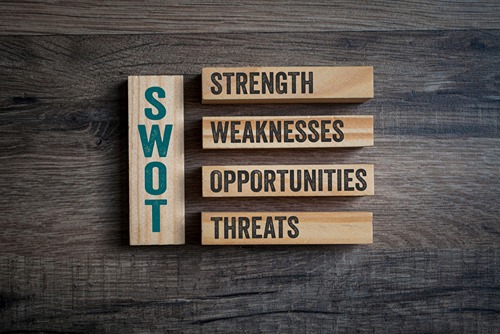
The term SWOT stands for Strengths, Weaknesses, Opportunities, and Threats. Each component of this method plays a key role in helping you evaluate your MSME’s position in the market:
|
Strengths
|
Capabilities and resources your business already has (things that give you an edge over others). These might include skilled staff, reliable supply chains, a loyal customer base, or even a well-known brand name.
|
|
Weaknesses
|
Areas where your business may be lacking. Limited funds, outdated systems, or operational inefficiencies often fall under this category.
|
|
Opportunities
|
External developments that your business could take advantage of. These could include shifts in customer preferences, gaps in the market, or new government schemes that support MSMEs.
|
|
Threats
|
Potential challenges from outside your business. Competitor moves, regulatory pressures, or rising costs are all examples of external threats.
|
In a growing economy, using a business SWOT analysis gives you a structured way to prepare for change.
Identifying Strengths in Your Business
One of the first steps in conducting a SWOT analysis is recognising your business's inherent strengths. These are the internal attributes that give you a competitive edge.
Examples of common MSME business strengths include:
- Established Brand Reputation: Being known for reliability or quality within your local market.
- Skilled Workforce: Employees with specialised knowledge or training.
- Efficient Processes: Streamlined operations that reduce costs and improve productivity.
- Customer Loyalty: Repeat clients and high customer satisfaction scores.
Identifying business strengths is crucial for building an effective MSME SWOT strategy that leverages what your company already does well.
Identifying Weaknesses in Your Business
Recognising internal weaknesses is equally important. These are the areas where your business underperforms compared to competitors.
Typical examples of weaknesses in small businesses include:
- Limited Capital: Restricted access to funding for day-to-day operations or expansion.
- Outdated Technology: Using inefficient systems that slow down operations.
- Weak Online Presence: Lack of digital marketing efforts or poor website design.
- Inadequate Financial Planning: Poor budgeting and cash flow management.
In such cases, a dedicated working capital loan or MSME loan can help bridge the gap.
A business loan eligibility calculator can assist you in estimating how much funding you may qualify for, enabling more informed financial planning.
How to Do a SWOT Analysis for Your Small Business
If you’re wondering how to do a SWOT analysis for MSMEs, follow these structured steps:
- Collect Data: Gather both internal data (e.g., financial reports, employee feedback) and external data (e.g., competitor analysis, market trends).
- Create a SWOT Matrix: Draw a four-quadrant chart with each section labelled as Strengths, Weaknesses, Opportunities, and Threats.
- Engage Stakeholders: Involve your team and even long-term customers to gain diverse insights.
- Populate Each Quadrant: Be realistic and specific about what applies to your business.
- Develop Strategies: Use the matrix to formulate actionable plans.
Understanding how to do a step-by-step SWOT analysis for MSMEs – and reviewing it periodically – can help you align resources with long-term business goals, identify blind spots, and stay competitive.
Identifying Opportunities for Small Businesses
Here are a few specific areas where you might find opportunities:
- Consumer Behaviour Changes: Shifting demand for eco-friendly, budget-friendly, or faster services can guide your product design or marketing approach.
- Technology Access: Cheaper access to software tools, e-commerce platforms, or automation services can help MSMEs cut costs and reach more customers. Many MSMEs use these to improve supply chain tracking or digital sales.
- Government Schemes: Small businesses in India can benefit from programmes like MUDRA loans, Startup India, or interest subsidy schemes. These can reduce financial pressure or fund expansions.
- Market Gaps: If a competitor leaves a region or a certain customer segment is being ignored, that opens a window for your business to fill the gap.
To identify these opportunities, start with basic market research. Read trade news, track competitor activity, and listen to what your customers are asking for. This step is crucial in developing a working MSME SWOT strategy.
Recognising Threats to Small Businesses
While external threats may be beyond your control, being aware of them allows you to prepare and respond proactively.
Key threats for Indian MSMEs include:
- Rising Competition: As more MSMEs enter the market and large players expand their reach, you may face pricing pressure or reduced market share.
- Regulatory Shifts: Sudden changes in tax rules, compliance norms, or import/export policies can increase your operational workload or cost.
- Economic Volatility: Inflation, fuel price hikes, or slowdowns in demand can reduce consumer spending, especially for non-essential products or services.
- Technology Gaps: If your business does not adopt new tech while competitors do, you may find it harder to keep up. This is a common weakness in small businesses and must be addressed quickly.
Monitoring these threats helps in evaluating MSME internal factors in relation to the broader environmental forces. This ensures that your SWOT analysis for MSMEs remains relevant and effective.
Implementing Your SWOT Analysis for Strategic Growth
After completing the SWOT analysis, the next step is implementation. This involves translating insights into actionable strategies.
For instance:
- Leverage Strengths: Use strong customer relationships to launch referral programmes.
- Address Weaknesses: Invest in employee training or upgrade your technology stack.
- Pursue Opportunities: Apply for government grants or expand your online presence.
- Mitigate Threats: Establish contingency plans and diversify suppliers.
Common Mistakes to Avoid in SWOT Analysis
Even though the SWOT framework is straightforward, certain mistakes can compromise its effectiveness.
Avoid the following:
- Imbalance: Overemphasising strengths and ignoring weaknesses or threats.
- Vagueness: Using generic statements instead of specific observations.
- Lack of Follow-Through: Failing to implement the strategies identified.
- Not Updating Regularly: Business environments change; so should your SWOT.
Awareness of these common SWOT analysis mistakes can ensure that your efforts yield tangible results.
Using Business Loans to Strengthen Your Strategy
Once you've completed your SWOT analysis and identified areas that need improvement or expansion, you may realise that your plans require financial support. In such cases, a business loan can help turn your plans into action.
For example, if your analysis highlights a weakness like limited capital or a threat like rising input costs, external funding can provide much-needed stability. Likewise, if you’ve identified an opportunity such as entering a new customer segment or going digital, a loan can support your investment in technology or marketing.
Before applying, it’s important to understand how the loan will affect your monthly cash flow. A business loan EMI calculator can help you estimate repayment amounts based on the loan amount, tenure, and interest rate. This ensures that your financing decisions align with your broader business goals and repayment capacity.
Conclusion
A clear SWOT analysis helps MSMEs make more confident and informed decisions. It identifies where you stand today and how to move forward, whether that means growing, fixing internal issues, or preparing for challenges.
If you’re seeking financial support to act on your SWOT insights, consider an unsecured business loan of up to INR 1 crore* from SMFG India Credit. Eligible applicants can benefit from flexible repayment tenures and competitive business loan interest rates. Apply online today or reach out to us for more details.