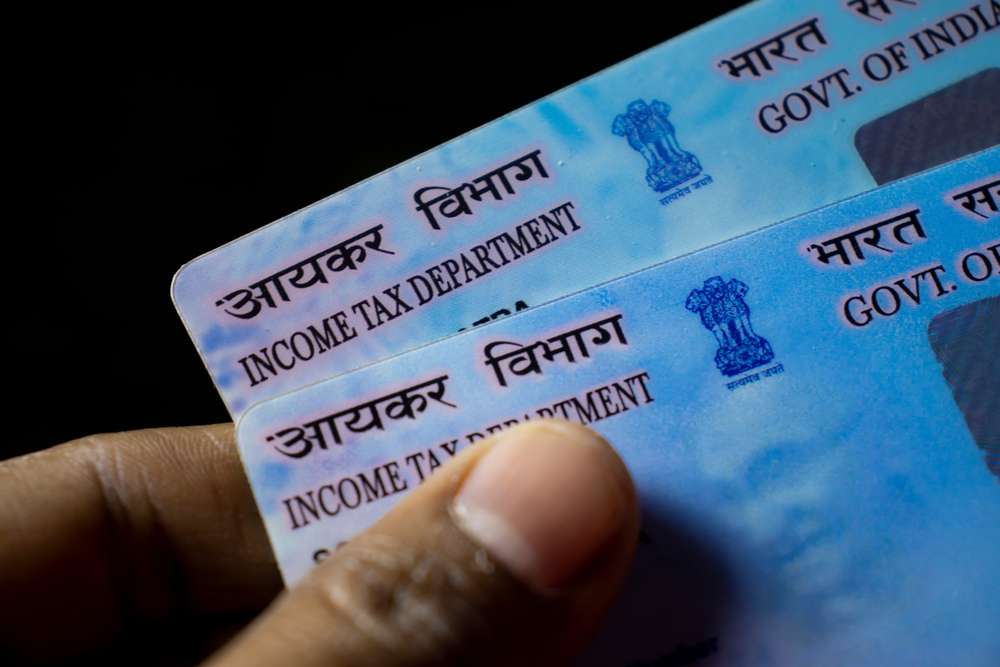
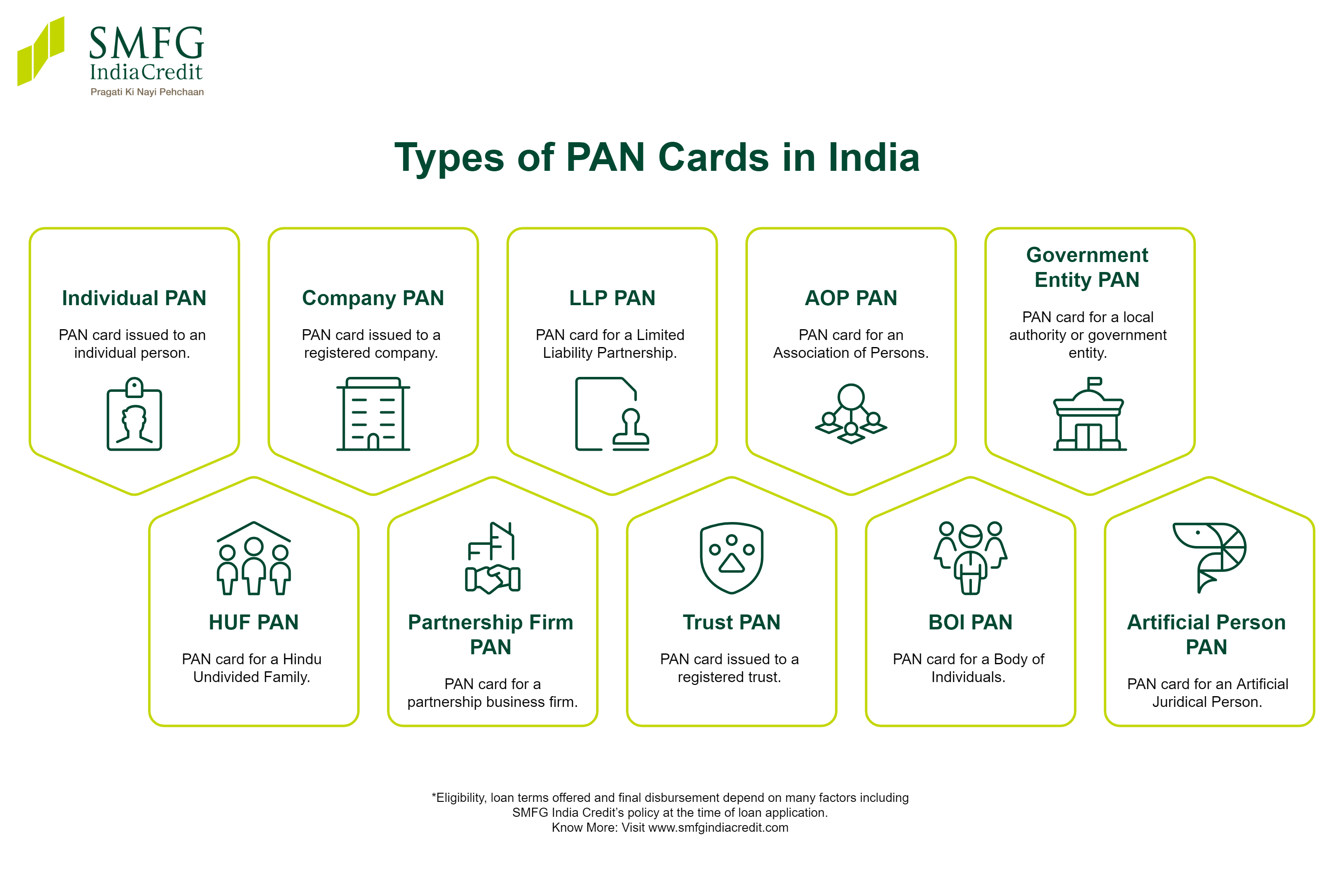
The types of PAN cards in India are based on the category of taxpayer rather than the design of the card itself. The Income Tax Department allots PAN based on the applicant category, such as individuals, companies, partnership firms, and trusts, helping maintain accurate taxpayer identification and financial records.
Read on to learn more about the different categories of Permanent Account Number (PAN) cards and who they apply to.
What Are the Different Types of PAN Cards in India?
The types of PAN cards in India refer to the different applicant categories under which permanent account numbers are allotted by the Income Tax Department. Although every PAN follows the same 10-character alphanumeric format, the applicant's status determines the category under which the PAN is allotted.
India's tax system covers individuals, businesses, government bodies, trusts, and other legal entities. These taxpayers may have different tax obligations and filing requirements, making the appropriate PAN classification important for maintaining accurate taxpayer records.
For example, the tax and filing requirements applicable to an individual may differ from those applicable to a company or partnership firm. Similarly, trusts and local authorities may be subject to their own requirements. The relevant PAN category therefore helps identify the taxpayer correctly for tax administration and compliance under the Income Tax Act, 2025.
Why Are There Different PAN Card Categories?
Different PAN card categories exist because taxpayers in India can have different legal structures and tax requirements. Individuals, companies, LLPs, trusts, and other entities may be subject to different tax provisions and filing requirements. Categorising PAN applicants according to their status helps the Income Tax Department correctly identify taxpayers, maintain accurate records, and link tax-related and specified financial transactions to the appropriate taxpayer.
Types of PAN Cards in India
1. Individual PAN Card
An Individual PAN card is allotted to individuals, including resident Indians, non-resident Indians (NRIs), and eligible foreign citizens. It is commonly used for filing income tax returns, carrying out specified banking and investment transactions, and completing certain high-value financial transactions. PAN is also commonly required as part of the documentation for financial products such as a personal loan.
2. Hindu Undivided Family (HUF) PAN Card
An HUF PAN card is issued to a Hindu Undivided Family, which is treated as a separate person for income tax purposes. The Karta, or head of the HUF, applies for PAN on its behalf. The PAN is used for filing the HUF's income tax returns and carrying out tax-related and specified financial transactions in the HUF's name.
3. Company PAN Card
A company registered in India requires a company PAN card, irrespective of whether it earns a profit. The PAN card for companies serves as a unique tax identification number and is used for filing corporate income tax returns, opening a bank account in the company's name, and carrying out specified tax-related and financial transactions. It may also be required when a company applies for external financing.
4. Partnership Firm PAN Card
A partnership firm PAN card is issued to registered or unregistered partnership firms. Since the firm is treated as a separate taxable entity, it must obtain its own PAN for tax filing, banking, business transactions, and regulatory compliance.
5. Limited Liability Partnership (LLP)PAN Card
An LLP PAN card is issued to limited liability partnerships registered under the Limited Liability Partnership Act, 2008. It is mandatory for filing income tax returns, conducting financial transactions, opening bank accounts, and complying with business taxation requirements.
6. Trust PAN Card
Trusts involved in charitable, religious, educational, or private activities require a trust PAN card. It helps them file income tax returns, claim eligible tax exemptions, manage donations, and comply with applicable tax regulations.
7. Association of Persons (AOP)PAN Card
An Association of Persons (AOP) PAN card is issued to two or more individuals or entities that come together for a common objective of generating income. Since the AOP is treated as a separate taxpayer, it requires its own PAN for tax compliance.
8. Body of Individuals (BOI)PAN Card
A Body of Individuals (BOI) PAN card is issued to a group of two or more individuals who come together for a shared purpose. A BOI may arise where the individuals jointly own, manage, or oversee an asset or property and distribute any generated income among themselves.
9. Local Authority/ Government Entity PAN Card
Local authorities and government bodies are recognised as separate PAN applicant categories. Local authorities may include municipal bodies and panchayats, while eligible government bodies fall under the Government category. PAN is used for applicable tax-related, financial, and reporting requirements.
10. Artificial Juridical Person PAN Card
An Artificial Juridical Person (AJP) PAN card is issued to entities that are recognised by law as persons but do not fall under other PAN applicant categories. Depending on their legal status, certain statutory bodies, institutions, or other entities created or recognised by law may be classified as AJPs and require their own PAN for applicable tax purposes.
How to Choose the Correct PAN Card Type
The correct PAN category primarily depends on the legal status or constitution of the applicant rather than the nature of their business or profession. Choosing an incorrect category may lead to issues or delays while processing the PAN application.
Use the following table as a quick reference:
|
Applicant
|
PAN Card Type
|
|
Salaried employee, freelancer, professional, or NRI applying as an individual
|
Individual
|
|
Hindu Undivided Family
|
HUF
|
|
Private or public limited company
|
Company
|
|
Partnership firm
|
Partnership Firm
|
|
Limited Liability Partnership
|
LLP
|
|
Trust constituted under applicable law
|
Trust
|
|
Association comprising two or more persons
|
AOP
|
|
Body comprising two or more individuals
|
BOI
|
|
Municipal body, panchayat, or other qualifying local authority
|
Local Authority
|
|
Central or State Government body falling under the Government category
|
Government
|
|
Legal person not covered under another PAN category
|
Artificial Juridical Person
|
If you are unsure about the appropriate applicant category, consider consulting a tax professional before submitting your PAN application.
Documents Required for Different PAN Card Types
Documents required for a PAN application depend on the applicant category and residential or registration status. Individuals generally need proof of identity, address, and date of birth, while entities typically submit documents establishing their legal status or registration.
|
Applicant Type
|
Common Documents
|
|
Individual
|
Proof of identity, proof of address, proof of date of birth, and photographs, as applicable
|
|
HUF
|
Affidavit by the Karta containing prescribed HUF details, along with the Karta's proof of identity, address, and date of birth
|
|
Company
|
Certificate of Registration issued by the Registrar of Companies
|
|
Partnership Firm
|
Certificate of Registration issued by the Registrar of Firms or copy of the partnership deed
|
|
LLP
|
Certificate of Registration issued by the Registrar of Companies
|
|
Trust
|
Trust deed or Certificate of Registration issued by the competent authority
|
|
AOP/BOI
|
Agreement or Certificate of Registration issued by the competent authority, or another prescribed document establishing identity and address
|
|
Local Authority
|
Prescribed document establishing the identity and address of the local authority
|
|
Government
|
Prescribed document establishing the identity and address of the Government applicant
|
|
Artificial Juridical Person
|
Certificate of Registration or prescribed document establishing identity and address
|
Note: The exact document requirements can vary based on the applicant category, residential status, and circumstances. Applicants should check the latest PAN application requirements before submission.
PAN Application Forms for Different Applicant Types
The correct PAN application form depends on whether the applicant is an individual or non-individual and whether they fall under the Indian or foreign applicant category.
|
Applicant Category
|
Applicable Form
|
|
Individual (Indian citizen)
|
Form F093
|
|
Non-individual (Indian entity)
|
Form F094
|
|
Individual (Foreign citizen)
|
Form F095
|
|
Non-individual (Foreign entity)
|
Form F096
|
Applicants should select the form applicable to their category and provide the required information and supporting documents. Using the correct form can help prevent errors or delays in processing the PAN application.
Conclusion
The different PAN card types in India help you choose the right applicant category and meet tax requirements. You can apply as an individual, company, LLP, trust, HUF, or another recognised entity. The correct PAN type can help you avoid application errors and meet the applicable tax and financial requirements.
Having the correct PAN also supports various financial requirements, including applications for credit products such as personal loans. Lenders commonly require PAN as part of the personal loan documents, along with other applicable KYC and income-related documents.
If you’re looking at financial support for any planned or unplanned expenses, SMFG India Credit offers unsecured funds of up to Rs. 10 lakhs* at competitive personal loan interest rates.
Before applying, you can use the personal loan eligibility calculator to get an estimate of the loan amount you may be eligible for based on the financial information provided.
Once you have an estimated loan amount, the personal loan EMI calculator can help you calculate your potential monthly repayments for different loan amounts, interest rates, and repayment tenures before you apply online.