Every business operates in an environment of uncertainty, where changing market conditions, evolving customer expectations, financial pressures, operational challenges, and regulatory developments can affect performance. Understanding the business risk meaning helps organisations prepare for potential challenges, protect profitability, and strengthen their operations over time. Recognising risk in business is an important part of effective risk management, enabling informed decisions that support long-term stability and growth. This guide explains the major types of business risk, the factors that influence them, and practical strategies to manage them effectively.
What Is Business Risk?
The business risk definition covers the possibility that internal or external factors may prevent a business from achieving its objectives or adversely affect its performance.
Essentially, the business risk meaning is the likelihood that uncertainty may reduce a company's ability to meet its business goals, generate revenue, earn profit, or continue its operations effectively.
Business risk can arise from changing market conditions, operational inefficiencies, financial challenges, technological disruptions, regulatory changes, or increased competition.
If not identified and managed in time, these risks can also affect a business's reputation, customer confidence, and long-term sustainability. Recognising potential risks early allows businesses to make informed decisions, strengthen resilience, and respond more effectively to changing business conditions.
Importance of Business Risk Management
Effective risk management is an ongoing discipline. Here is why it matters:
- Reduces the likelihood and financial impact of potential losses.
- Helps business owners and executives make better-informed decisions.
- Protects brand trust and organisational reputation.
- Supports compliance with applicable laws, licences, and regulatory requirements.
- Helps identify growth opportunities by enabling businesses to assess and manage risks effectively.
A well-managed business is also better positioned to plan its finances and support sustainable growth. If you are considering a startup business loan* or other forms of business financing, understanding and managing key risks can help strengthen your business plan and overall financial preparedness.
Causes of Business Risk
Several causes of business risk can affect an organisation's ability to achieve its objectives. Some risks originate within the business, while others arise from external conditions beyond its control. Understanding these factors affecting business risk helps enterprises prepare for potential challenges and respond more effectively.
- Internal Causes: Weak management, inefficient processes, employee errors, poor financial planning, and cash flow constraints can affect day-to-day operations and business performance.
- External Causes: Changes in the economy, increased competition, new regulations, rapid advances in technology, and natural disasters can influence demand, operating costs, and business continuity.
By identifying these sources of business risk at an early stage, enterprises can strengthen internal controls, improve planning, and develop strategies to minimise potential disruptions.
Internal and External Causes of Business Risk
The table below highlights the key external and internal causes of business risk with common examples.
|
Risk Cause
|
Internal/External
|
Example
|
|
Poor business process or inefficient workflows
|
Internal (internal risk)
|
Delays, higher operating costs, or lower productivity
|
|
Poor inventory management
|
Internal
|
Stockouts or excess inventory
|
|
Employee errors
|
Internal
|
Incorrect orders or compliance issues
|
|
Economic slowdown
|
External (external risk)
|
Lower customer demand
|
|
Increased competition
|
External
|
Reduced sales or pricing pressure
|
|
Regulatory changes
|
External
|
Additional compliance costs
|
|
Technological disruption
|
External
|
Existing products or services becoming outdated
|
|
Natural disasters
|
External
|
Temporary business interruption or supply chain disruption
|
Many internal risks can be addressed through better planning, process improvements, employee training, and technology upgrades. If additional funding is required to implement these improvements, enterprises may consider tailored financing options such as an MSME/SME loan, depending on their requirements and eligibility. However, borrowing should always be supported by careful financial planning and a clear repayment strategy.
Types of Business Risk
Businesses face different risks depending on their industry, size, and operating environment. Understanding the major business risk types helps organisations identify potential challenges and prepare suitable response strategies.
The different types of business risk include:
- Strategic risk
- Operational risk
- Financial risk
- Market risk
- Compliance and legal risk
- Reputational risk
- Technology and cyber risk
- Credit risk
- Competitive risk
- Environmental and natural disaster risk
Strategic Risk
Strategic risk arises when business decisions or long-term plans do not achieve the intended outcomes. A strategic business risk may result from poor business strategy, an unsuccessful market entry, changing customer behaviour, intense competition, or an ineffective growth plan. Businesses should regularly review their strategies to remain competitive.
Operational Risk
Operational risk relates to failures in business operations, employees, internal process controls, supply chain, or system failure. Examples include machine breakdowns, employee errors, delivery delays, or IT outages. Managing operational business risk requires stronger processes, training, and monitoring to reduce process risk.
Financial Risk
Financial risk in business refers to risks linked to cash flow, debt, changing interest rate levels, credit risk, liquidity, and repayment obligations. Common financial risk examples include poor budgeting, delayed collections, rising borrowing costs, and inability to meet liabilities on time. These can increase overall business financial risk.
Market Risk
Market risk in business arises from changing customer demand, price fluctuation, inflation, competition, and shifting market trends. Common market risk examples include falling demand, raw material price volatility, or new substitutes entering the market. This kind of business market risk can directly affect sales and profitability.
Compliance/Legal Risk
Compliance risk arises when businesses fail to meet applicable laws, regulations, licence requirements, tax compliance rules, or contract terms. Legal risk in business may lead to disputes, notices, financial penalties, or operational restrictions. Changes in laws can also create regulatory risk.
Reputational Risk
Reputational risk or business reputation risk can result from poor customer service, product failures, unethical practices, negative reviews, or unresolved customer complaints. Protecting customer trust and maintaining a positive brand image are essential for long-term success.
Technology and Cyber Risk
Technology risk includes risks from cybersecurity incidents, data breach events, outdated software, failed automation, or disruptions to IT systems. As businesses adopt AI and digital tools, they must manage cyber risk in business and broader digital business risk through better controls.
Credit Risk
Credit risk in business becomes a concern when customer credit is not repaid on time or a borrower defaults. Customer payment risk, overdue receivables, delayed payment, and bad debt can affect cash flow. This is also referred to as credit default risk.
Competitive Risk
Competitive risk arises when competitors introduce better products, adopt aggressive pricing, respond better to changing customer preferences, or gain greater market share through stronger product differentiation.
Natural Disaster/Environmental Risk
Natural or environmental risk in business includes risks from flood, fire, earthquake, climate risk, and supply disruption. Natural disaster business risk can damage assets, interrupt operations, and increase costs. Adequate planning and insurance can help reduce the impact.
Business Risk Examples
The impact of business risk varies across industries because each sector faces different operational and market challenges. Reviewing examples of business risk can help organisations identify potential vulnerabilities and prepare appropriate mitigation strategies.
|
Industry
|
Risk Examples in Business
|
Possible Impact
|
|
Retail business
|
Sudden decline in customer demand or inventory shortages
|
Lower sales and excess or insufficient stock
|
|
Manufacturing
|
Rising raw material costs or supply chain disruptions
|
Higher production costs and delayed deliveries
|
|
Service business
|
Skilled employee attrition or service interruptions
|
Reduced customer satisfaction and revenue loss
|
|
E-commerce
|
Website outages or cybersecurity incidents
|
Lost orders and damage to customer trust
|
|
Healthcare
|
Changes in regulations or equipment failures
|
Service disruptions and increased compliance costs
|
|
Finance
|
Credit defaults or fraud
|
Financial losses and increased operational risk
|
|
Construction
|
Project delays, labour shortages, or adverse weather
|
Cost overruns and delayed project completion
|
Factors Affecting Business Risk
Several business risk factors influence the level of uncertainty an enterprise faces. Some originate within the organisation, while others arise from external conditions. Understanding these factors influencing business risk enables enterprises to identify potential challenges and strengthen their resilience.
- Business Size: Smaller businesses may have limited financial and operational resources to manage unexpected events.
- Industry: Certain industries are naturally exposed to higher levels of risk because of market dynamics or regulatory requirements.
- Competition: Intense competition can affect pricing, profitability, and market share.
- Financial Structure: High debt levels can increase financial obligations and repayment pressure.
- Operational Efficiency: Efficient processes help reduce costs and minimise operational disruptions.
- Technology Dependence: Greater reliance on technology can increase exposure to system failures and cyber threats.
- Regulatory Environment: Changes in laws and regulations may require businesses to adapt quickly.
- Customer and Supplier Concentration: Heavy dependence on a few customers or suppliers can increase business risk if those relationships are disrupted.
- Economic Conditions: Changes in the economy, such as inflation or slowdowns, can affect demand and business performance.
Business Risk vs Financial Risk
The difference between business risk and financial risk is that business risk is broader and relates to the overall ability of a business to achieve its objectives, while financial risk focuses specifically on the company's finances and funding. Business risk includes challenges arising from operations, strategy, competition, regulations, and market risk, whereas financial risk primarily relates to cash flow, debt, liquidity, and the ability to meet financial obligations.
|
Basis
|
Business Risk
|
Financial Risk
|
|
Scope
|
Covers overall business performance and operations
|
Focuses on financial obligations and funding
|
|
Primary Causes
|
Operational, strategic, market, legal, and compliance issues
|
Debt levels, cash flow shortages, interest costs, and liquidity
|
|
Impact
|
Can affect sales, profitability, reputation, and continuity
|
Can affect repayment capacity, financial stability, and access to funding
|
|
Management
|
Process improvements, strategic planning, risk controls, and compliance
|
Financial planning, debt management, cash flow monitoring, and prudent borrowing
|
Although the two are closely related, financial risk is one component of overall business risk and should be managed alongside operational and strategic risks.
Tip: Before applying for business finance, assess your repayment capacity and borrowing requirements carefully to avoid future cash flow strain. Using tools such as a business loan eligibility calculator can help you estimate the loan amount you may qualify for and support more informed financial planning.
Risk Management Strategies for Businesses
No business can eliminate every risk, but effective business risk management strategies can reduce potential disruptions and improve long-term resilience. Understanding how to manage business risk enables organisations to respond more effectively when challenges arise and minimise their impact.
|
Strategy
|
Practical Example
|
|
Risk Avoidance
|
Avoid entering a market or undertaking a project that carries an unacceptable level of uncertainty.
|
|
Risk Reduction
|
Strengthen internal controls, employee training, and quality checks to reduce operational issues.
|
|
Risk Transfer
|
Purchase insurance or outsource specialised activities to transfer certain liabilities to a third party.
|
|
Risk Acceptance
|
Accept low-impact risks after evaluating their potential effect and preparing for them.
|
|
Risk Monitoring
|
Regularly review business performance, market conditions, and maintain a contingency plan to respond quickly to changing circumstances.
|
How to Reduce Business Risk
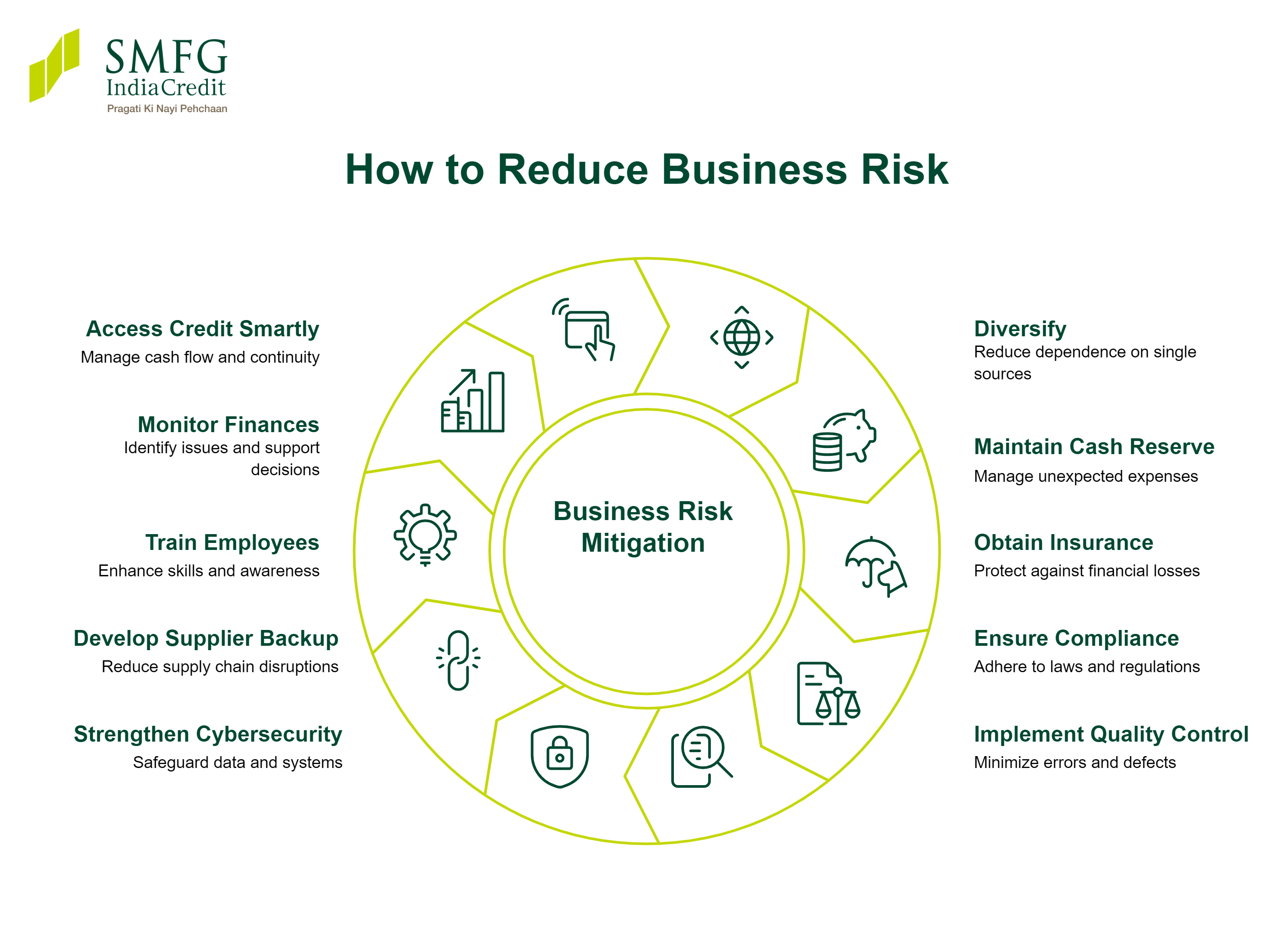
Businesses can reduce business risk by adopting proactive measures that strengthen operations and improve preparedness. Effective business risk mitigation often involves a combination of financial planning, operational controls, and regular monitoring.
- Diversification: Reduce dependence on a single product, market, or customer by pursuing diversification.
- Cash Reserve: Maintain an adequate cash reserve to manage unexpected expenses or temporary disruptions.
- Insurance: Obtain appropriate insurance cover to protect against potential financial losses.
- Compliance: Conduct regular compliance reviews to ensure adherence to applicable laws and regulations.
- Quality Control: Implement quality checks to minimise errors, defects, and customer complaints.
- Cybersecurity: Strengthen cybersecurity measures to safeguard business systems and sensitive data.
- Supplier Backup: Maintain a supplier backup plan to reduce the impact of supply chain disruptions.
- Employee Training: Regularly train employees on business processes, safety, and compliance requirements.
- Financial Monitoring: Review financial performance regularly to identify issues early and support informed decision-making.
- Access Credit Smartly: Plan your financing needs in advance. A business loan or working capital facility, when used prudently and supported by a sound repayment plan, can help businesses manage temporary cash flow gaps and support operational continuity.
Business Risk Checklist
A regular business risk assessment checklist can help identify potential issues before they affect day-to-day operations. Reviewing key business areas periodically also supports better planning and decision-making.
- Review your financial records, cash flow, and outstanding liabilities regularly.
- Evaluate the efficiency of your operations and identify process improvements.
- Ensure ongoing compliance with applicable laws, licences, and regulatory requirements.
- Check that your technology systems are secure, updated, and regularly backed up.
- Monitor changing needs and feedback from customers.
- Avoid overdependence on a limited number of suppliers by maintaining alternative sourcing options.
- Review your insurance coverage periodically to ensure it remains adequate.
- Maintain and test an emergency plan to minimise disruption during unexpected events.
Reviewing this risk management checklist regularly can help businesses respond more effectively to changing conditions and strengthen long-term resilience.
Conclusion
Business risk is an inevitable part of running any enterprise, but identifying potential challenges early and responding with appropriate strategies can help minimise their impact. Regular monitoring, sound planning, and mitigating risk in financial management enable businesses to make informed decisions, strengthen resilience, and support sustainable growth.
If your enterprise requires additional funds to manage working capital, expand operations, or invest in growth opportunities, SMFG India Credit offers unsecured funds of up to Rs. 1 crore* at competitive business loan interest rates.
Review the business loan documents required and start your online application. Feel free to contact us for any assistance during the application process.
* Please note that this article is for your knowledge only. Loans are disbursed at the sole discretion of SMFG India Credit. Final approval, loan terms, disbursal process, foreclosure charges and foreclosure process will be subject to SMFG India Credit's policy at the time of loan application. If you wish to know more about our products and services, please contact us