The working capital cycle measures the time it takes for a business to convert its investment in inventory into cash through sales and collections. It is an important financial metric that helps you evaluate cash flow, operational efficiency, and short-term liquidity. This guide explains the working capital cycle, its formula, importance, and calculation.
What Is the Working Capital Cycle?
The working capital cycle meaning refers to the time between a business paying for inventory or other operating inputs and receiving cash from customers, while considering the credit period available from suppliers.
In essence, the definition of the working capital cycle is the number of days your money remains tied up in day-to-day business operations before it returns as cash.
Every business requires working capital to manage routine expenses such as purchasing raw materials, paying salaries, covering utility bills, and maintaining inventory. A shorter working capital cycle generally means cash flows back into the business more quickly, helping you meet operational expenses and invest in growth. A longer cycle may indicate that funds remain locked in inventory or unpaid customer invoices for an extended period.
The working capital cycle also plays an important role in financial planning. By monitoring inventory levels, customer payments, and supplier credit, you can improve cash flow management and make better financial decisions. Businesses across manufacturing, retail, wholesale, and services use this metric to assess operational performance and maintain healthy liquidity.
Operating Cycle vs Working Capital Cycle
The working capital and operating cycle both track business activities, but they focus on different stages of cash movement.
The operating cycle measures the time taken to purchase inventory, sell goods, and collect payment from customers. The working capital cycle goes a step further by considering the credit period received from suppliers.
For example, if your operating cycle is 90 days and your suppliers provide 30 days of credit, your working capital cycle becomes 60 days. This gives a clearer picture of how long your own funds remain invested in the business.
Why Is the Working Capital Cycle Important?
The working capital cycle's importance helps you understand how efficiently your business manages cash. A well-managed cycle improves liquidity, supports better cash flow management, reduces frequent borrowing requirements, and strengthens profitability. It also enables smoother day-to-day operations by ensuring sufficient funds are available to purchase inventory, pay suppliers, and meet operating expenses without unnecessary financial pressure.
How Does the Working Capital Cycle Work?
The working capital cycle follows a sequence of business activities that begins with purchasing inventory and ends when customer payments are collected. Each stage influences how quickly cash returns to your business. An efficient inventory management cycle, faster collections, and better supplier payment terms help shorten the cycle and improve cash flow.
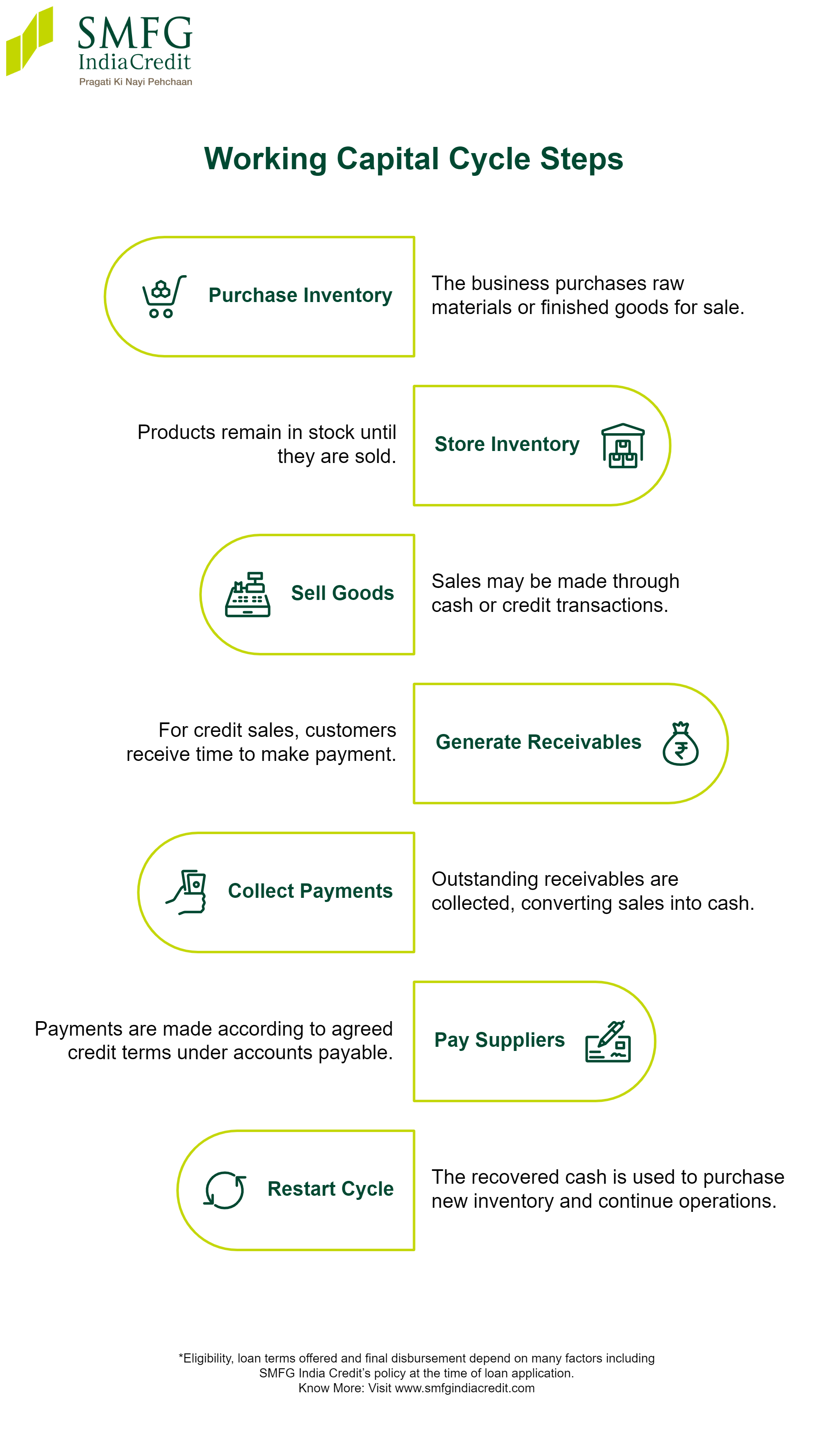
The working capital cycle generally follows these steps:
- Purchase inventory: The business purchases raw materials or finished goods for sale.
- Store inventory: Products remain in stock until they are sold.
- Sell goods or services: Sales may be made through cash or credit transactions.
- Generate accounts receivable: For credit sales, customers receive time to make payment.
- Collect payments: Outstanding receivables are collected, converting sales into cash.
- Pay suppliers: Payments are made according to agreed credit terms under accounts payable.
- Restart the cycle: The recovered cash is used to purchase new inventory and continue operations.
Each stage directly affects the cash conversion cycle (CCC). Efficient inventory control, timely customer collections, and effective management of the accounts payable cycle contribute to a healthier working capital cycle.
Purchase of Inventory
The working capital cycle begins when you purchase inventory or raw materials required for business operations. This stage creates an immediate cash outflow unless supplier credit is available. Good inventory management helps maintain the right stock levels while reducing storage costs and avoiding excess inventory.
Sale of Goods or Services
After inventory is ready for sale, the business generates revenue by selling goods or providing services. Sales may be made through cash transactions or on credit. Faster inventory turnover generally leads to quicker cash generation and supports smoother business operations.
Collection from Customers
The final stage of the working capital cycle is collecting payments from customers. For cash sales, the business receives money immediately. For credit sales, the amount remains under accounts receivable until customers make payment. Faster debtor collection improves cash conversion, strengthens liquidity, and allows the business to reinvest funds into inventory, production, or expansion. Efficient follow-up on receivables also reduces the risk of delayed payments affecting day-to-day operations.
Working Capital Cycle Formula
The working capital cycle formula measures the number of days your funds remain tied up in business operations before returning as cash. It considers the time inventory is held, the time customers take to pay, and the credit period received from suppliers.
Working Capital Cycle Formula = Inventory Days + Receivable Days − Payable Days
|
Component
|
Breakdown
|
|
Inventory Days
|
Average Inventory ÷ Cost of Goods Sold × 365
|
|
Receivable Days
|
Average Accounts Receivable ÷ Net Credit Sales × 365
|
|
Payable Days
|
Average Accounts Payable ÷ Cost of Goods Sold × 365
|
A shorter working capital cycle generally indicates that your business converts its investment into cash more quickly, improving liquidity and operational efficiency.
Working Capital Cycle Components
The working capital cycle consists of three key components that determine how efficiently cash moves through your business.
- Inventory Days: Measures the average number of days inventory remains in stock before being sold. Lower inventory days usually indicate better inventory management and faster stock movement.
- Receivable Days: Shows the average time customers take to pay outstanding invoices. Lower receivable days improve cash conversion and strengthen cash flow.
- Payable Days: Represents the average number of days your business takes to pay suppliers. A reasonable payment period allows you to manage cash efficiently while maintaining healthy supplier relationships.
Together, these components help you evaluate operating efficiency and identify opportunities to improve working capital management.
Working Capital Cycle Calculation Example
Suppose your business has:
- Inventory Days = 45 days
- Receivable Days = 30 days
- Payable Days = 25 days
The calculation will be:
Working Capital Cycle = 45 + 30 − 25 = 50 days
This means your business takes 50 days to recover the cash invested in inventory after accounting for supplier credit. If you reduce inventory holding periods or collect payments faster, the working capital cycle becomes shorter, improving liquidity and reducing the need for additional working capital.
Factors Affecting the Working Capital Cycle
Several internal and external factors influence the length of the working capital cycle. Monitoring these factors helps improve cash flow and overall financial performance.
Key factors include:
- Inventory Control: Excess inventory increases storage costs and extends the cash conversion cycle period.
- Customer Credit Policy: Longer credit periods delay collections and increase the accounts receivable cycle.
- Supplier Payment Terms: Flexible payment terms improve cash availability without disrupting supplier relationships.
- Sales Demand: Seasonal fluctuations can affect inventory levels and cash inflows.
- Production Efficiency: Faster production reduces inventory holding periods.
- Industry Practices: Working capital requirements vary across manufacturing, retail, wholesale, and service sectors.
- Economic Conditions: Inflation, supply chain disruptions, and changing customer demand may influence cash flow and inventory planning.
How to Improve the Working Capital Cycle
A shorter working capital cycle allows your business to recover cash faster and use it more efficiently for daily operations and growth. By improving inventory management, collecting customer payments on time, and managing supplier credit wisely, you can strengthen liquidity and reduce dependence on external funding.
Here are some practical ways to improve your working capital cycle:
- Improve Inventory Turnover: Keep optimal stock levels to avoid excess inventory and reduce holding costs.
- Speed Up Receivables: Send invoices promptly, follow up on outstanding payments, and encourage early payments through suitable incentives.
- Optimise Supplier Payments: Make use of agreed credit periods while maintaining healthy supplier relationships.
- Forecast Cash Flow Regularly: Monitor expected inflows and outflows to plan working capital requirements in advance.
- Automate Financial Processes: Use accounting and inventory management software to improve accuracy and reduce delays.
- Review Credit Policies: Assess customer creditworthiness and establish suitable payment terms to minimise overdue receivables.
If your business experiences temporary cash flow gaps, you can explore a business loan or a working capital loan to help meet short-term funding requirements.
Enterprises with strong creditworthiness and sound financial records may be better positioned to qualify for competitive business loan interest rates. A lower interest rate can help reduce borrowing costs and make it easier to manage repayments alongside regular business expenses.
Working Capital Cycle Across Different Businesses
The working capital cycle varies across industries because each business operates differently. Manufacturing businesses usually hold inventory for longer periods, while service businesses often have little or no inventory. Retailers generally experience quicker inventory turnover, whereas wholesalers may offer longer credit periods to customers.
|
Business Type
|
Inventory
|
Receivables
|
Payables
|
Typical Working Capital Cycle
|
|
Manufacturing
|
High
|
Moderate
|
Moderate
|
Longer due to production and inventory holding
|
|
Retail
|
Moderate
|
Low
|
Moderate
|
Shorter because inventory moves quickly
|
|
Wholesale
|
Moderate
|
High
|
Moderate to High
|
Moderate to long due to customer credit
|
|
Services
|
Very Low
|
Moderate
|
Low
|
Usually the shortest since inventory requirements are minimal
|
Although every industry has different working capital requirements, regularly monitoring inventory, receivables, and supplier payments helps improve cash flow and operational efficiency across all business types.
Limitations of the Working Capital Cycle
While the working capital cycle is a useful measure of operational efficiency, it should be analysed alongside other financial indicators. On its own, it may not provide a complete picture of a business's financial health.
Some limitations include:
- Seasonal Demand: Businesses with seasonal sales may experience significant variations in their working capital cycle throughout the year.
- Industry Differences: Comparing businesses across different industries may not provide meaningful insights because operating models vary.
- Inventory Fluctuations: Sudden changes in inventory levels can temporarily affect the cycle.
- Credit Terms: Different customer and supplier credit policies may influence the calculation.
- Cash Flow Variability: Unexpected expenses or delayed customer payments may impact liquidity even when the working capital cycle appears healthy.
- Business Expansion: Rapid growth often increases inventory and receivables, temporarily extending the working capital cycle.
Conclusion
The working capital cycle helps you measure how efficiently your business converts its investment in inventory into cash. By tracking inventory days, receivable days, and payable days, you can identify opportunities to improve cash flow, strengthen liquidity, and support smoother business operations. Regularly reviewing your working capital cycle, along with adopting better inventory and receivables management practices, can help your business maintain financial stability and support long-term growth.
To help meet your enterprise funding requirements, SMFG India Credit offers unsecured business loans of up to Rs. 1 crore* at competitive interest rates and a tenure of up to 60 months*.
Use our business loan EMI calculator to estimate your monthly repayments and apply online.
It is also prudent to prepare the required business loan documents beforehand to experience a smooth application process.