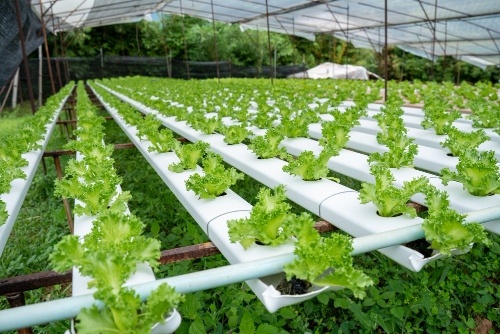
Hydroponic farming is a method of growing crops without soil, using nutrient-rich water under controlled conditions. In 2026, the hydroponic farming business in India is gaining attention as cities demand cleaner, fresher produce. If you are planning a hydroponic farming startup, especially in metro areas, urban hydroponic farming offers strong commercial potential. With rising food safety awareness and water scarcity concerns, hydroponic farming in India is becoming a serious business opportunity.
What Is a Hydroponic Farming Business?
Hydroponic farming is a system where crops grow in water enriched with essential nutrients instead of soil. In a business setting, hydroponic farming operates under monitored temperature, humidity, and light conditions.
When you understand what hydroponic farming is, you’ll also realise that it is more than gardening. A hydroponic farming business in India involves structured production, crop planning, pricing, packaging, and direct supply to retailers, restaurants, and supermarkets. Unlike hobby setups, commercial hydroponic farming focuses on yield, repeat cycles, and steady revenue.
Why Start a Hydroponic Farm Business in India?
Hydroponic farming in India is expanding because urban demand is changing how food is grown and sold.
Here is why you should consider hydroponics in agriculture:
- Growing demand for pesticide-free produce
- Up to 90% water savings compared to soil farming
- Potential higher yield per square foot
- Year-round production
- Premium pricing for quality produce
- Suitable for rooftops and limited land spaces
Hydroponic farming allows you to supply leafy greens and herbs directly to urban buyers. With climate variability affecting soil farms, this type of farming may offer more predictable output.
How to Create a Hydroponic Farming Business Plan
Before you invest in hydroponic farming in India, you need a clear business plan. Without planning, even a good hydroponic farming setup may struggle.
Your plan should include:
- Crop selection (high-demand hydroponic crops for profit)
- System choice (NFT, DWC, or others)
- Estimated hydroponic farming setup cost
- Expected yield per cycle
- Market price per kg
- Distribution channels
- Break-even timeline
In a structured hydroponic farming business in India, you track KPIs such as crop cycle duration, production per square foot, and monthly operational costs.
You must calculate your expected hydroponic farming profit after deducting electricity, labour, packaging, and nutrients. If you plan a mid-scale commercial unit, your hydroponic farming startup cost will depend on space, Polyhouse or Net House, automation, and climate systems.
Investors and lenders often ask for projected ROI. A clear plan also helps you estimate the hydroponic setup cost in India accurately and avoid overspending.
Types of Hydroponic Systems
When planning your hydroponic farming setup, you must choose the right system:
- Nutrient Film Technique (NFT): Ideal for leafy greens, low water use, suitable for urban units.
- Deep Water Culture (DWC): Roots stay submerged; good for lettuce and herbs.
- Ebb & Flow: Periodic flooding and draining system.
- Drip Hydroponic System: Controlled feeding, suitable for fruiting crops.
- Aeroponics: Roots suspended in air, mist-fed nutrients.
In India, the Nutrient Film Technique (NFT) and drip hydroponic systems can work well for commercial hydroponic farming. Advanced growers may also adopt Aeroponics for premium crops.
Hydroponic vs Traditional Farming Comparison
|
Factor
|
Hydroponic Farming
|
Traditional Farming
|
|
Water Usage
|
Up to 90% lower
|
High
|
|
Yield
|
Higher per sq ft
|
Lower
|
|
Space
|
Suitable for urban areas
|
Requires farmland
|
|
Pesticide Use
|
Minimal
|
Higher
|
|
Crop Cycles
|
Faster, year-round
|
Seasonal
|
Hydroponic farming in India supports urban agriculture where land is limited.
Key Components of a Hydroponic Farming Business Plan
For a structured hydroponic farming business in India, your plan should include:
|
Component
|
Details
|
|
Executive Summary
|
Vision and scale
|
|
Crop Selection
|
High-demand leafy greens, herbs
|
|
System Type
|
Nutrient Film Technique (NFT), Deep Water Culture (DWC), Aeroponics, Drip Hydroponic System
|
|
CAPEX
|
Hydroponic farming setup cost, infrastructure expenses, Polyhouse/Net House
|
|
OPEX
|
Electricity, nutrients, labour
|
|
Yield Forecast
|
Monthly output
|
|
Pricing
|
Premium vs wholesale
|
|
Marketing
|
Retail tie-ups
|
|
Break-even
|
ROI estimate
|
This structure ensures your hydroponic farming project remains financially viable.
Funding Required to Start a Hydroponic Farm Business
Your hydroponic farming cost largely depends on the scale and level of automation you plan to implement.
- Small rooftop unit: ₹3–5 lakhs
- Medium commercial Polyhouse unit: ₹15–25 lakhs
- Large automated unit with climate control system and LED grow lights: ₹40 lakhs+
The cost of the hydroponic farming setup typically includes the installation of growing channels, pumps, tanks, LED grow lights, sensors, and a climate control system.
In hydroponic farming in India, electricity backup is important due to power dependency.
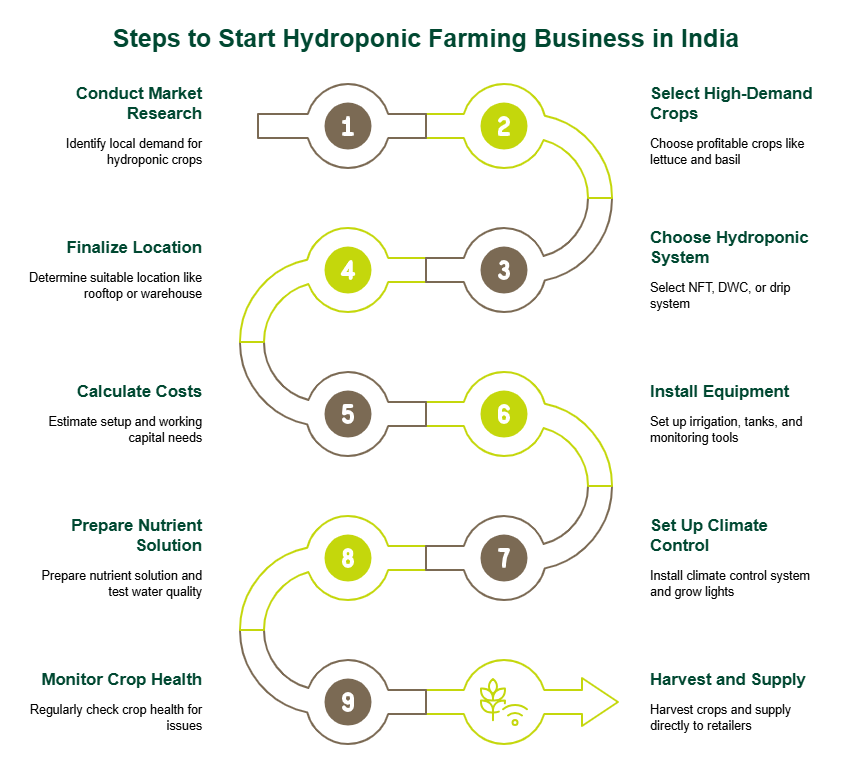
How to Start a Hydroponic Farming Business in India
If you are asking how to start hydroponic farming, follow these steps carefully:
- Conduct local market research.
- Select high-demand hydroponic crops for profit, such as lettuce and basil.
- Choose system: Nutrient Film Technique (NFT), Deep Water Culture (DWC) or Drip Hydroponic System.
- Finalise location (rooftop, warehouse, Net House, or Polyhouse).
- Calculate the hydroponic farming setup cost and estimate working capital needs.
- Install irrigation, tanks, and monitoring tools.
- Set up the Climate Control System and LED Grow Lights.
- Prepare nutrient solution and test water quality.
- Monitor crop health regularly.
- Harvest and supply directly to retailers.
When learning how to start hydroponic farming, remember that proper technical training significantly reduces crop losses and improves consistency in yield.
Required Licences & Registrations for Hydroponic Farming
For commercial hydroponic farming in India, the following licences and registrations may be required, depending on your scale and business model:
- FSSAI Licence (if selling packaged produce)
- GST registration (if turnover exceeds threshold)
- MSME Registration (Udyam), if applicable
- Local municipal approvals
- Optional organic certification
A proper hydroponic farming licence ensures compliance, smooth operations, and easier access to markets or financing.
Benefits of Hydroponic Farming vs Traditional Farming
Hydroponic farming provides measurable advantages, especially for high-density urban cultivation.
|
Aspect
|
Hydroponic
|
Traditional
|
|
Water
|
Efficient
|
High usage
|
|
Yield
|
Higher density
|
Lower
|
|
Pesticides
|
Reduced
|
Common
|
|
Space
|
Urban friendly
|
Rural land
|
|
Climate Risk
|
Lower
|
High
|
This makes hydroponics in agriculture suitable for city-based production.
Importance of Hydroponic Farming in India
Hydroponic farming in India supports food security by enabling local and efficient food production. It also helps reduce transport costs because crops can be grown closer to urban consumption centres. With shrinking farmland and increasingly erratic rainfall, Controlled Environment Agriculture (CEA) offers much-needed climate resilience.
Hydroponic farming reduces water dependency, ensures consistent nutrient delivery, and supports year-round production. Through CEA and protected cultivation, growers can produce high-quality crops with higher uniformity and better hygiene standards.
How business loans Support Hydroponic Farming Business
A dedicated business loan can play an important role in helping you manage and expand your hydroponic farming venture efficiently. Such financing options may be used to meet working capital needs, purchase growing equipment, invest in high-quality hydroponic systems, upgrade climate control infrastructure, and maintain stable cash flow during crop cycles.
However, most business loan eligibility criteria generally require a minimum operational history – often three years – along with proof of stable income and profitability over the previous two financial years.
If you are starting a new hydroponic farming business and do not yet meet these criteria, you may explore alternative financing options. One practical route is opting for a personal loan with a co-applicant who has a strong credit profile and steady income.
Steps to Apply for a Business Loan for Hydroponic Farming
Here are the general steps involved in applying for a hydroponic farming business loan:
- Check Eligibility: Assess your credit score, business vintage, annual turnover, existing liabilities, and repayment capacity to ensure you meet the lender’s criteria.
- Arrange Documents: Keep essential business loan documents ready, including PAN, Aadhaar, business registration proof, bank statements, and CA-audited financial statements.
- Apply Online or Offline: Submit your application on the lender’s website by uploading the required documents, or visit the nearest office for offline submission.
The lender will assess your profile and verify documents before sanctioning the loan.
Government Schemes & Subsidies for Hydroponic Farming
You may receive support under the following programmes:
- National Horticulture Mission (NHM)
- Mission for Integrated Development of Horticulture (MIDH scheme)
- State horticulture subsidies
These programmes may offer a hydroponic farming subsidy in India for infrastructure development, including Polyhouse construction, irrigation systems, and climate control equipment.
Common Risks & Challenges in Hydroponic Farming
Despite its advantages, hydroponics requires careful planning and technical understanding. Key challenges include:
- Power dependency for pumps, aeration, and climate control
- High initial hydroponic farming cost, especially for climate-controlled units
- Nutrient imbalance affecting crop health and yield
- Market access, especially for new growers entering B2B or retail supply chains
- Technical skills requirement for managing pH, EC, lighting, and system hygiene
Even in hydroponic farming, regular monitoring is essential to maintain consistent crop quality and prevent system failures.
Conclusion
Hydroponic farming in India offers a structured path to urban agriculture growth. With proper planning, right system selection, and controlled operations, your hydroponic farming business can scale steadily.
By investing wisely in your hydroponic farming setup, securing the required licences, and calculating profitability, you can build a sustainable venture. With government support like the National Horticulture Mission (NHM) and the MIDH scheme, combined with rising urban demand, hydroponic farming is positioned for long-term commercial viability.
If you require financial support as you scale operations, consider an business loan of up to Rs. 1 crore* from SMFG India Credit. Use the business loan eligibility calculator and EMI calculator to make informed decisions and apply online to access competitive interest rates.
Please note that the costs mentioned in this article are indicative estimates. Actual investment requirements may vary based on your location, scale of operations, system type, input prices, infrastructure quality, and prevailing market conditions.
* Please note that this article is for your knowledge only. Loans are disbursed at the sole discretion of SMFG India Credit. Final approval, loan terms, disbursal process, foreclosure charges and foreclosure process will be subject to SMFG India Credit's policy at the time of loan application. If you wish to know more about our products and services, please contact us