India's food industry continues to offer abundant opportunities for aspiring entrepreneurs, making it one of the best sectors to explore profitable food business ideas. Rising demand driven by food delivery apps, changing consumer lifestyles, and a growing entrepreneurial culture has created space for innovative food startup ideas across both urban and smaller markets. Whether you are planning a low-investment food business from home or considering a cloud kitchen business, choosing the right concept, maintaining quality, and understanding customer preferences can help you grow into a sustainable and scalable venture.
Why Consider a Food Business in India?
A food business in India continues to offer strong growth potential, driven by evolving consumer preferences, higher disposable incomes, and the widespread adoption of online food delivery platforms. From cloud kitchens and healthy meal options to regional cuisines and packaged foods, there are diverse food industry opportunities for entrepreneurs with different budgets and business models. Whether you operate from home or a commercial kitchen, a well-planned concept can evolve into a high-profit food business over time. The expanding market also creates attractive food startup opportunities because of:
- Rising demand for cloud kitchens and online food delivery
- Increasing consumer preference for healthy, convenient, and regional food options
- Relatively low initial investment for many food business models
- The flexibility to expand operations as customer demand grows
Best Food Business Ideas in India
The best food business ideas in India cater to a wide range of budgets, skills, and customer preferences. No matter if you are seeking for a profitable food business with long-term growth potential or exploring a homemade food business names list for inspiration, there are opportunities across both offline and online models. To help you choose the right option, the ideas below are categorised by investment level and business type.
Low-Investment Food Business Ideas
A low-investment food business can be a practical option for individuals looking to enter the food sector without significant capital. Many small food business ideas require only basic equipment, a home kitchen, and the necessary licences. With the right planning and quality standards, a low-cost food startup can gradually expand as customer demand grows.
Tiffin Service Business
A tiffin service business caters to office professionals, students, and working families seeking fresh, home-style meals. As a home-based food business, it typically follows a subscription model with daily or weekly meal plans, creating recurring revenue. Growing demand for reliable meal delivery service providers, especially in metro cities, makes this a viable option for many entrepreneurs.
|
Particulars
|
Estimate
|
|
Initial investment
|
Rs. 50,000–Rs. 2 lakhs
|
|
Potential monthly earnings*
|
Rs. 30,000–Rs. 1.5 lakhs+
|
*Indicative figures only. Actual investment and earnings vary based on location, pricing, customer base, and operating costs.
Home Bakery Business
A home bakery business allows entrepreneurs to offer customised cakes, brownies, cookies, cupcakes, and festive desserts with relatively low upfront costs. Many successful cake business ideas rely on social media platforms such as Instagram and WhatsApp to showcase products and attract customers before expanding into a full-fledged bakery startup.
Beginner tips:
- Focus on a small, high-quality product range
- Invest in attractive packaging and food photography
- Build an online presence through social media
- Offer customised orders for birthdays and celebrations
Pickle & Homemade Snacks Business
A homemade snacks business offers opportunities to sell traditional products with strong local appeal. A pickle business can include regional pickles, while a food business from home may also feature papad, namkeen, chutneys, and spice mixes. Attractive branding, hygienic packaging, and consistent quality can help improve customer trust and repeat purchases.
Food Cart/Street Food Stall
A street food business remains one of India's most popular food ventures due to relatively low investment and steady customer demand in busy locations. A food stall business or food cart business can perform well near offices, colleges, markets, and transport hubs.
Popular product options:
- Momos
- Chaat
- Sandwiches
- Tea and coffee
- Fresh snacks
Online Food Business Ideas
The growth of food delivery platforms and social media has created numerous online food business ideas for entrepreneurs. An online food startup can reach customers without investing in a traditional restaurant, while a digital food business can use delivery apps, social media marketing, and online ordering to expand its customer base.
Cloud Kitchen Business
A cloud kitchen business prepares food exclusively for online orders without dine-in facilities. Also known as a ghost kitchen business, it benefits from lower overhead costs than traditional restaurants. Many operators partner with Swiggy and Zomato to build an online food delivery business, and some run multiple virtual brands from the same kitchen to serve different customer segments.
Advantages:
- Lower rental and operational costs
- Multiple brands from one kitchen
- Wider customer reach through delivery platforms
- Easier menu testing and expansion
Food Delivery Business
A food delivery business model focuses on preparing or sourcing meals for direct customer delivery. A meal delivery startup may offer subscription-based lunches, healthy meal plans, or regional specialities. An online food delivery service can operate through its own website, mobile app, or third-party delivery platforms.
Popular food delivery business ideas:
- Healthy meal subscriptions
- Office lunch delivery
- Regional cuisine delivery
- App-based ordering
High-Profit Food Business Ideas
Several high-profit food business ideas offer attractive margins when supported by efficient operations and consistent demand. A profitable food startup often focuses on products with strong repeat purchases. Additionally, a high-margin food business can benefit from premium pricing, value addition, or bulk orders.
Catering Business
Catering business ideas continue to attract entrepreneurs because weddings, corporate events, private parties, and institutional catering generate recurring demand. A catering startup can gradually expand its capacity, as a well-managed food catering service often benefits from referrals and repeat event bookings.
Beverage & Juice Business
Juice business ideas continue to grow as consumers increasingly prefer fresh and healthier beverage options. A beverage startup may offer fresh juice counters, mocktails, regional drinks, smoothies, or packaged beverages. The success of several Indian healthy drinks business brands demonstrates the growing demand for convenient, better-for-you beverage choices.
Food Business Ideas for Women
Many food business ideas for women offer the flexibility to balance work and personal commitments while generating income. A home food business for ladies often requires relatively low investment and can be expanded gradually. Suitable business ideas for housewives include:
- Home bakery
- Tiffin service
- Homemade snacks and pickles
- Dessert boxes
- Festive food hampers
Food Business Ideas for Students
Several food business ideas for students can be managed alongside studies with modest investment and flexible working hours. A student food startup may begin on a small scale and grow through referrals and online promotion. A part-time food business can also leverage social media to build a loyal customer base.
Popular ideas include:
- Homemade snacks
- Tea or coffee stall
- Online dessert sales
- Fresh juices
- Weekend food pop-ups
Things to Consider Before Taking Up the Best Food Business Idea
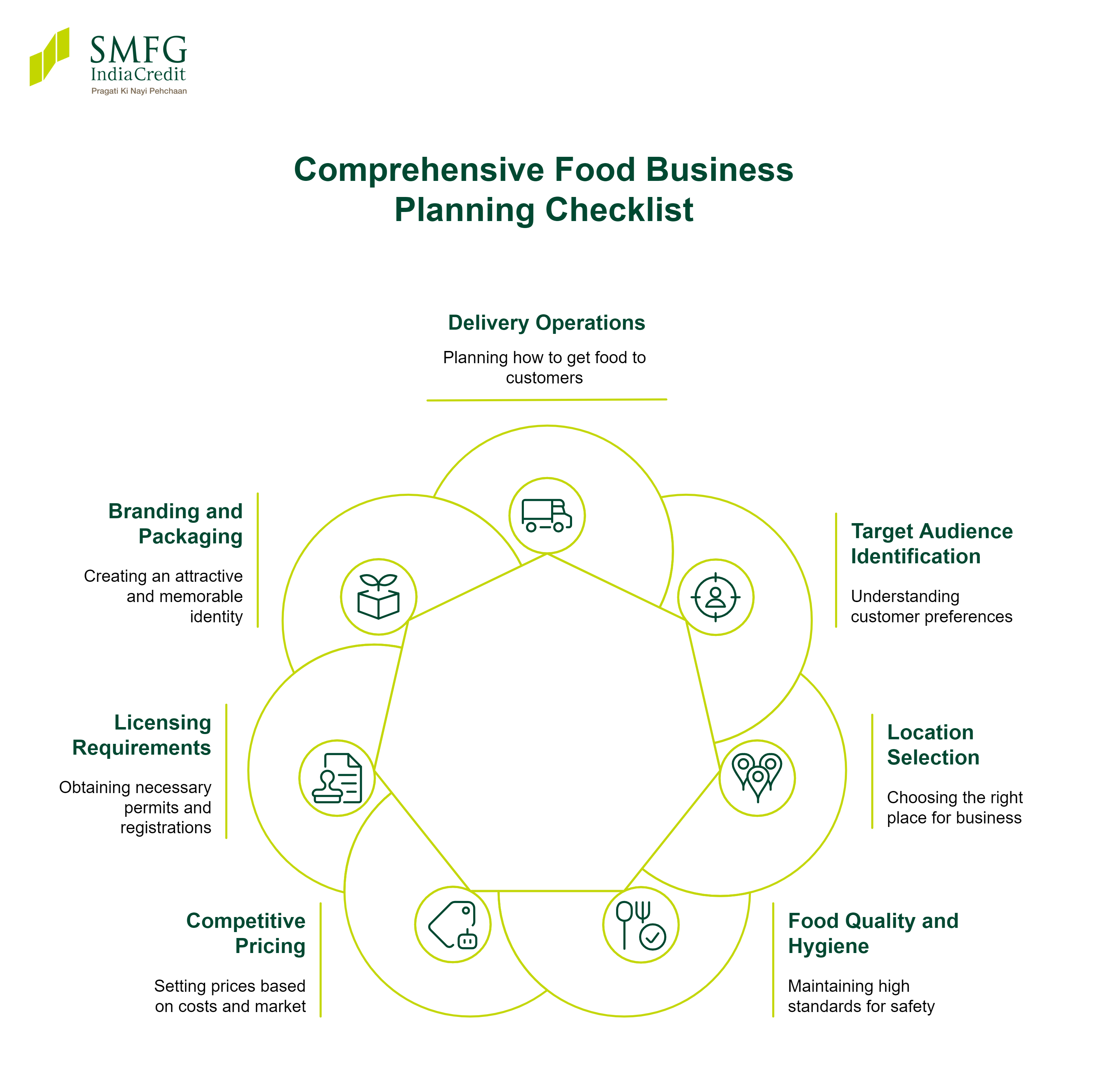
Choosing the right food business idea involves more than selecting a product with good demand. Effective food business planning helps you understand your market, manage costs, and build a sustainable business over time. Before finalising your idea, prepare a food startup checklist to evaluate the practical aspects of your business model and ensure you meet the necessary operational and regulatory requirements.
Consider the following checklist:
- Identify Your Target Audience: Understand who your customers are and what they prefer to buy.
- Choose the Right Location: Select a suitable location or delivery area based on your business model and customer demand.
- Prioritise Food Quality and Hygiene: Maintain consistent taste, quality, and food safety standards to build customer trust.
- Set Competitive Pricing: Price your products after considering ingredient costs, operating expenses, and local competition.
- Complete Licensing Requirements: Obtain the required registrations and licences, such as FSSAI (Food Safety and Standards Authority of India), before commencing operations.
- Invest in Branding and Packaging: Attractive, food-safe packaging and a strong brand identity can improve customer recall and repeat purchases.
- Plan Your Delivery Operations: Decide whether to manage deliveries yourself or partner with online food delivery apps to ensure timely service.
Licences Required for a Food Business in India
Obtaining the required food business licences is an important step before commencing operations. Depending on the nature and scale of your venture, FSSAI registration for a food business is a crucial requirement. You may also need GST registration (where applicable) and approvals from the local municipal authority or other relevant authorities. Securing the necessary licences for a food business helps ensure regulatory compliance, builds customer confidence, and reduces the risk of legal or operational issues.
Common requirements include:
- FSSAI registration or licence, as applicable.
- GST registration, where required under GST laws.
- Local municipal or trade licence, wherever applicable.
- Fire safety or other statutory approvals, depending on the nature and size of the business.
Also Read:- FSSAI License Fees And Cost Explained
How to Market a Food Business Online
Effective food business marketing can help attract new customers and encourage repeat orders. To promote food business online, combine consistent branding with an active digital presence across multiple platforms. A well-planned digital marketing strategy, supported by engaging content and customer reviews, can improve visibility and build trust over time. Using social media marketing for a food business alongside delivery platforms also helps expand your reach.
Effective marketing strategies include:
- Showcase your products through Instagram and WhatsApp Business
- Create and regularly update your Google Business Profile
- Collaborate with local food influencers for greater visibility
- Partner with food delivery platforms such as Swiggy and Zomato
- Encourage customer reviews and share user-generated content on social media
Common Challenges in the Food Business
Every food venture comes with its own set of operational and market-related hurdles. Understanding these food business challenges in advance can help you plan more effectively and reduce avoidable risks. Many food startup problems arise from difficulty in maintaining consistent quality, managing costs, and meeting customer expectations, while established businesses also face ongoing restaurant business risks as competition and consumer preferences evolve.
Common challenges include:
- Maintaining consistent food quality, taste, and hygiene standards
- Standing out in a highly competitive local and online market
- Managing delivery logistics to ensure timely and fresh deliveries
- Obtaining and renewing the required licences and regulatory approvals
- Retaining customers through consistent service, quality, and value
- Controlling food costs, inventory, and operational expenses without affecting profitability
Funding Your Food Business Growth
As your food business expands, you may need additional funds to increase production capacity, upgrade equipment, open a new outlet, invest in marketing, or strengthen working capital. An unsecured business loan can help finance these growth plans without disrupting your day-to-day operations.
However, note that when assessing business loan eligibility, lenders typically consider business vintage or operational stability, along with other factors such as turnover, profitability, and credit profile. Most lenders require an operational history of at least 3 years when considering a business loan application. If you do not yet meet this requirement, you may explore a personal loan, including a co-applicant who has a strong credit history and stable income.
Conclusion
Choosing from the many good food business ideas available today depends on your budget, skills, and long-term goals. Whether you opt for a home-based venture or an online model, careful planning, consistent quality, and customer satisfaction are essential for sustainable growth.
As your venture grows, SMFG India Credit offers unsecured funds of up to Rs. 1 crore* at competitive business loan interest rates to support expansion and working capital requirements.
Review the required business loan documents and apply online for a convenient and hassle-free process.