Quick Summary
- Standard deduction in income tax is a flat deduction available to salaried employees and pensioners that reduces their taxable income without requiring any bills or expense proof.
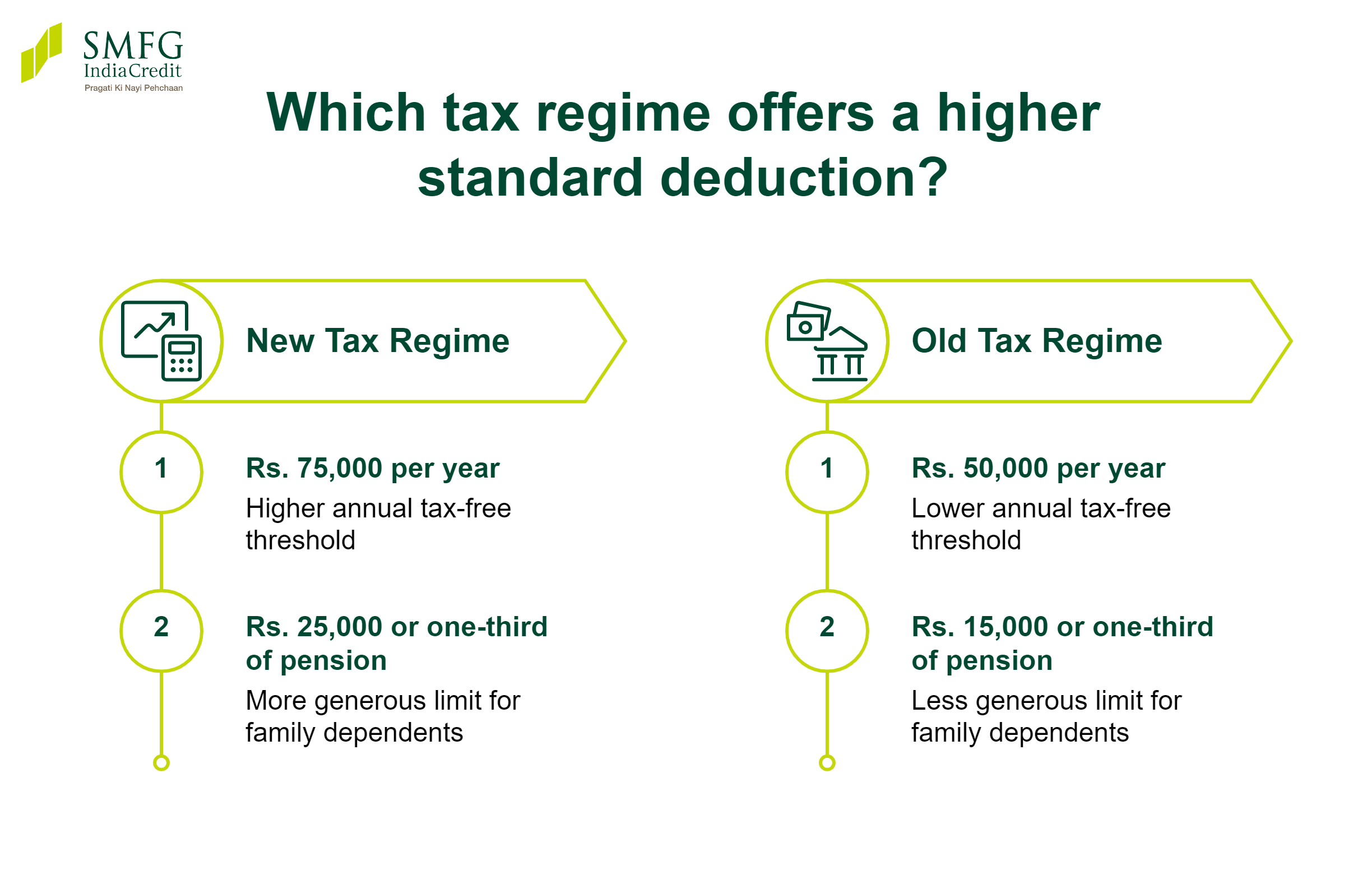
- Under the New Tax Regime, the standard deduction limit is Rs. 75,000 per year (increased from Rs. 50,000 in Budget 2024).
- Under the Old Tax Regime, it remains Rs. 50,000. For family pensioners, the limit was raised from Rs. 15,000 to Rs. 25,000 under the New Tax Regime.
- Budget 2025 also enhanced the rebate under Section 87A under the New Tax Regime, effectively resulting in zero income tax for eligible individuals with annual taxable income up to Rs. 12 lakhs, or up to Rs. 12.75 lakhs for salaried taxpayers after the Rs. 75,000 standard deduction, subject to the applicable conditions.
Standard deduction in income tax is one of the simplest tax benefits available in India. Understanding the standard deduction's meaning matters for every salaried person and pensioner because it reduces your taxable income before any other deductions are applied. It is a fixed amount subtracted from gross salary or pension income, and it requires no documentation or investment on your part.
What Is the Standard Deduction in Income Tax?
The standard deduction meaning refers to a flat income tax deduction allowed to salaried individuals and pensioners under Section 16(ia) of the Income Tax Act. It reduces your gross salary or pension before your tax liability is computed. Unlike Section 80C investments or health insurance premiums, this is a salary tax deduction that applies automatically based on your income category. You do not need to submit bills, receipts, or any other expense proof to claim it.
The current limits are:
- New Tax Regime: Rs. 75,000 per year for salaried employees; Rs. 75,000 per year or the actual pension amount, whichever is lower, for pensioners; and Rs. 25,000 or one-third of the family pension, whichever is lower, for family pensioners.
- Old Tax Regime: Rs. 50,000 per year for salaried employees; Rs. 50,000 per year or the actual pension amount, whichever is lower, for pensioners; and Rs. 15,000 or one-third of the family pension, whichever is lower, for family pensioners.
Why Was Standard Deduction Introduced?
Before the standard deduction was reintroduced in Budget 2018, salaried employees could claim a transport allowance of Rs. 19,200 per year and a medical reimbursement of up to Rs. 15,000 per year. Both required documentation. The government replaced these benefits with a single flat deduction to simplify the tax system, reduce paperwork, and provide broader tax relief to salaried taxpayers.
Standard Deduction Limit in Income Tax
The standard deduction limit has changed over the years. Here are the latest standard deductions:
|
Financial Year
|
Old Tax Regime
|
New Tax Regime
|
|
FY 2018–19
|
Rs. 40,000
|
Not applicable
|
|
FY 2019–20 to FY 2023–24
|
Rs. 50,000
|
Not applicable
|
|
FY 2024–25 onwards
|
Rs. 50,000
|
Rs. 75,000
|
From FY 2024–25, the standard deduction in the New Tax Regime was raised to Rs. 75,000, making the new regime more attractive for those with fewer deductions to claim. The standard deduction amount in the Old Tax Regime continues at Rs. 50,000.
Standard Deduction Under the Old Tax Regime vs the New Tax Regime
|
Factor
|
Old Tax Regime
|
New Tax Regime
|
|
Standard deduction amount
|
Rs. 50,000
|
Rs. 75,000
|
|
Pensioner amount
|
Rs. 50,000 or actual pension, whichever is lower
|
Rs. 75,000 or actual pension, whichever is lower
|
|
Family pensioner deduction
|
Rs. 15,000 or one-third of the family pension, whichever is lower
|
Rs. 25,000 or one-third of the family pension, whichever is lower
|
|
Other deductions allowed
|
Yes (80C, 80D, HRA, etc.)
|
No (most not available)
|
|
Best suited for
|
High deduction claimants
|
Low deduction claimants
|
|
Default regime
|
No
|
Yes
|
The standard deduction in the New Tax Regime of Rs. 75,000 gives it a clear edge for those who do not have significant Section 80C or other deductions to claim.
However, if your total deductions under the older regime are higher, you may still pay less tax despite the lower standard deduction in the Old Tax Regime.
For taxable income standard deduction purposes, both regimes allow this benefit automatically. The primary old vs new tax regime deduction difference is the amount.
Who Is Eligible for the Standard Deduction?
Wondering exactly who can claim the standard deduction? Standard deduction eligibility covers two categories of taxpayers.
Standard Deduction for Salaried Employees
Standard deduction for salaried employees applies to all individuals earning income under the head "Salaries," regardless of whether they work in the private sector, public sector, or government. The salary exemption is automatically reflected in Form 16 issued by your employer and in your TDS computation. You do not need to separately declare or apply for it.
Understanding this deduction, along with other eligible tax benefits, can help you better assess your disposable income and overall financial position. This can be useful when evaluating repayment capacity before exploring financial products such as a personal loan.
Standard Deduction for Pensioners
Standard deduction for pensioners applies to individuals receiving a pension from a former employer, as such pension is taxable under the head "Salaries."
This pension tax deduction provides meaningful relief to retirees who have limited income sources. Family pensioners (those receiving a pension on behalf of a deceased employee) get a separate and lower limit.
Who Cannot Claim the Standard Deduction?
Here is who is not eligible for the standard deduction:
- Freelancers, consultants, and self-employed individuals whose income falls under "Profits and Gains from Business or Profession".
- Business owners, whether sole proprietors, partners in a firm, or directors drawing income classified as business income.
- Individuals earning only rental income, capital gains, or income from other sources with no salary component.
How Does Standard Deduction Work?
The standard deduction calculation is applied directly to your gross salary or eligible pension income before your taxable income is computed.
This taxable income reduction is automatically considered while computing TDS by your employer and when your Income Tax Return (ITR) is processed.
Standard Deduction Example
|
Particulars
|
Old Tax Regime (Rs.)
|
New Tax Regime (Rs.)
|
|
Gross Annual Salary
|
12,00,000
|
12,00,000
|
|
Less: Standard Deduction
|
50,000
|
75,000
|
|
Net Taxable Salary
|
11,50,000
|
11,25,000
|
In this example, the standard deduction in the New Tax Regime reduces taxable income by an additional Rs. 25,000 compared with the Old Tax Regime.
How to Claim Standard Deduction in ITR?
The standard deduction under Section 16(ia) is the simplest one to claim because it is pre-filled in most cases. Here is how the income tax filing deduction process works:
- Your employer deducts the standard deduction while computing TDS on your salary and reflects it in Form 16.
- When you file your ITR, the pre-filled data from Form 16 will already include the deduction.
- If you are a pensioner and file your own ITR, enter the pension amount received and claim the deduction manually under the salary head.
- Select the appropriate tax regime (old or new) before confirming the deduction amount applicable to you.
- No separate form, declaration, or proof needs to be submitted for this tax-saving deduction.
Documents Required for Standard Deduction Claim
You do not need to submit any specific documents for standard deduction claims. However, it is advisable to keep the following records readily available in case of scrutiny or verification by the Income Tax Department:
- Form 16 issued by your employer (showing the TDS deducted and the standard deduction allowed)
- Salary slips for the relevant financial year
- Pension Payment Order (PPO) or bank statements reflecting pension credits (for pensioners)
- ITR acknowledgement after filing
Benefits of Standard Deduction
The standard deduction offers the following financial and tax-saving benefits:
- No Documentation Required: Unlike many other deductions, you do not need to submit bills, receipts, or any other supporting documents to claim it.
- Available to All Eligible Salary Earners: Whether your salary is Rs. 5 lakhs or Rs. 50 lakhs, the standard deduction is available to all eligible salaried employees.
- Reduces Taxable Income Directly: The standard deduction lowers your taxable income, reducing the amount on which your income tax is calculated.
- Available to Pensioners: Pensioners receiving a pension taxable under the head "Salaries" can also claim the deduction without meeting any investment-related conditions.
- Higher Under the New Tax Regime: At Rs. 75,000, the deduction under the New Tax Regime is higher than the standard deduction in the Old Tax Regime, making it a valuable benefit for taxpayers who opt for the new regime.
- Simplifies Tax Filing: Your employer generally considers the deduction while computing TDS and reflects it in Form 16, making the process simpler for salaried taxpayers.
- Supports Better Financial Planning: By reducing your taxable income, the standard deduction can increase your disposable income. This may also support personal loan eligibility and better approval prospects, subject to other factors considered by lenders.
Common Misconceptions About Standard Deduction
Misconception 1: The standard deduction in the New Tax Regime is not available.
From FY 2024–25 onwards, the standard deduction in the New Tax Regime is Rs. 75,000, making the new regime more attractive for many taxpayers.
Misconception 2: Pensioners cannot claim the standard deduction.
Pensioners can and should claim the standard deduction. Since a pension is taxed as salary, the deduction applies under the same rules.
Misconception 3: You need to invest something to get this deduction.
No. It requires no investment. It is a flat salary tax deduction that reduces your taxable salary automatically.
Misconception 4: Self-employed individuals can also claim it.
They cannot. The standard deduction eligibility is limited to those with salary or pension income. Business and professional income earners are excluded from this tax-saving deduction benefit.
Misconception 5: The standard deduction under Section 16(ia) requires a separate form.
No separate form is needed. Your employer applies the standard deduction under Section 16(ia) when computing TDS, and it flows automatically into your ITR when you file.
Conclusion
The standard deduction is one of the simplest and most valuable tax benefits available under India's income tax system. Salaried employees and eligible pensioners should ensure that this income tax filing deduction is correctly reflected in their Form 16 and Income Tax Return (ITR).
If you are planning a major financial decision after your post-tax assessment, SMFG India Credit can support your goals with unsecured funds of up to Rs. 10 Lakhs* at attractive personal loan interest rates.
Use the personal loan eligibility calculator to assess your borrowing capacity and apply online for a hassle-free experience.